Where days turn into nights
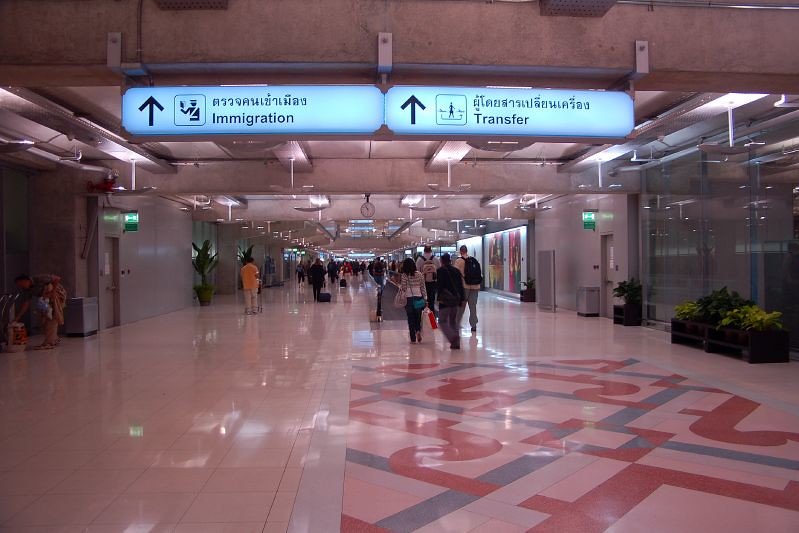
Suvarnabhumi Airport in Bangkok is always open. It may doze off like an animal does when it’s hot, but it never gives in to quiet. At midnight, it sounds like a machine that has been left on too long, fluorescent lights buzz above, luggage wheels rattle on tiles, and announcements in three languages play in a jarring loop.
When I got there, the clock had already given up its power. Was it early or late? Still Tuesday or Monday? My body and my boarding card stated different things. Families yawned while giving cousins flowers, backpackers leaned against walls as if they had fallen asleep while walking, and flight staff marched in sharp uniforms that felt brutally out of place with our sweat-stained tiredness.
I had been to many airports previously, but midnight in Bangkok felt different. It’s not a mess. It’s not quiet. It’s a break. Like the city outside, a metropolis of street food and neon temples has stopped beating for a moment, holding its breath while people pass through its veins.
As I stood in line for immigration with my passport in hand, I realized something I had never said before: airports at this time of day aren’t for travel. They are about being seen. Without sunlight and a goal, we show ourselves to be creatures of waiting. Our ambition was reduced to one wish: a stamp, a seat, and a little freedom to keep going.
I looked at the faces of the people surrounding me. A businessman scanned through his phone, his eyes jumping to numbers that were plainly more important than where he was. A young couple leaned into each other, pretending to be close, despite being very tired. The monk sat completely still, and the light made his robe look like a little bonfire.
Everyone was waiting. Different reasons, different places to go, yet all stuck in the same bright prison.
“An airport at midnight isn’t just a place to wait for your flight. It’s a place in the middle where you are nothing and everybody at the same time.”
The Road That Isn’t Written
I recognized that this story wasn’t going to be about the country I was travelling to when I moved my weight from one foot to the other. It wasn’t going to be about the temples, traffic, street markets, or beaches. No, this is what it would be like before all that. The liminal hour when identity is on a lanyard, belonging is just paper and ink, and if you look closely, you can see humanity in its most raw form, more than any city street could ever show.
Immigrating at midnight. In between flights. Between faces. There are the selves we show to others and the selves we can’t hide when we’re too tired to pretend.
The Line of Shadows
“A queue isn’t just about waiting. What comes up when you can’t get away from yourself is what it’s about.”
The queue started like a rumour: a long line of people that snaked back and forth across the hall, a dance of tiredness that no one wanted to do. We moved forward, stopped, then moved forward again. Our progress was measured more in sighs than in miles.
Immigration at Bangkok’s Suvarnabhumi doesn’t seem to be in a hurry. There are no loud authorities or flashing lights. There is only the certainty that no matter how many counters you open, there will always be more people coming than stamps to greet them.
There were many shadows in the line, and I don’t mean the low light. I mean, how tiredness turned our faces into masks, how excitement bowed our shoulders, and how we all became blurry shapes of ourselves, stretched and muddled by the time we’d already spent travelling.
There was a young German backpacker behind me. He was already sunburned and had a hoodie pulled around his waist. His grin seemed like it had been made with cheap alcohol. He hummed something like Nirvana or Oasis gently, as if the music might make the line go faster.
A Thai grandma in front of her held a clear plastic bag full of medicine bottles. Her hands shook a little, and every few minutes she tightened the strap on her purse as if it might fall off. She never raised her head. Only down, only forward, and one shuffle at a time.
A businessman next to me with a loosened tie stabbed at his phone, and his thumbs moved so quickly that they blurred. His sneakers were clean, but the sweat stains on his collar gave him away. He was the kind of guy who thought that waiting was stealing, as if time belonged to him more than everyone else.
What struck me was how the hierarchy fell apart here. The backpacker, granny, and CEO all moved in time with the shuffling feet. Everyone was waiting in the same cold light.
I tried to distract myself by counting the counters in front of me: nine. Each was a bright cubicle where uniformed officers sat in straight rows, looking at faces, flipping pages, and stamping with mechanical finality. I thought of them as cogs in a machine, with each stamp being a click of inevitability and each face being another unit of throughput.
But the air was not mechanical at all. It smelled like jet fuel, quick noodles, and sweat. Hindi, Russian, French, Thai, and English all mixed in the soundscape, like threads from a tapestry that had been worn away by time.
The line stopped altogether now and then, and the weight of quiet pulled down harder. People moved the straps on their bags, stretched their calves, and sighed into the air. Some people looked at their watches in bewilderment, as if time itself had slowed down to make fun of them. Some people went back to their phones, only to realise they were still stuck in line.
I found myself looking at faces not to judge them, but out of curiosity. It seemed weird to see so many people in one file who might never share a bus, a meal, or even a conversation. They were shoulder to shoulder, equal because they were waiting.
I saw something I hadn’t expected in those faces: weakness. The German boy’s humming wasn’t bravado; it was a way to get his mind off things. The grandmother’s shaking hands didn’t mean she was weak; they said she was strong. The businessman’s angry typing seemed less about control and more about fear, fear of being still, fear of being irrelevant, and dread of what silence would say if he paused long enough to hear it.
That’s the thing about lines: they don’t just make you wait. They take everything away from you. They make you look inside yourself. When you move at half a meter every 10 minutes, you can’t get away from your thoughts.
I moved forward, squeezed between strangers, and felt something in my chest loosen. The line wasn’t just keeping me in place. It was holding up a mirror.
And the reflection wasn’t very comfy.
Faces Without a Background
“Every passport tells a story.” “Every stamp is a scar that looks like ink.”
Airports are excellent equalizers, but not in the manner that travel brochures say they are. They don’t make things the same. They get rid of context.
A monk in saffron robes outside talks to you about devotion and living without material wants. Inside, at midnight in an immigration line, he is simply another traveller with a boarding permit. His robe’s colour has faded into the fabric of other garments.
The girl in her sleek athleisure outfit with clean white sneakers and AirPods stuck in her ears? She may be a fitness influencer, the daughter of a diplomat, or a barrister in the city who is spending her last salary to go away. In the queue, she seems like everyone else: exhausted, waiting, and not identified by her style but by the impatience in her eyes.
And the man with the cheap, worn-out bag that seems like it has been carried across continents without any respect? He might not have any money. He might be a migrant labourer. He might also be someone with more money than they know what to do with, carrying only essentials like clothes, papers, and medicine.
That’s what midnight is like at an airport. It takes away the stage lighting of everyday life, the clues and backgrounds we use to sort people. Everyone becomes a phrase that isn’t finished yet, a tale that isn’t finished yet. When you look at faces, you don’t see answers; you see questions.
I noticed myself glancing at a woman in her forties. Her lipstick was excessively bright for the time of day, and her hair was nicely styled. She just had a weak plastic bag of instant noodles with her. She didn’t smile at anyone and pulled her blouse down as if she were being watched. When it was eventually her turn at the counter, she bowed gently, got her stamp, and walked away as if she had practiced it. For a while, I thought she might have been holding her breath for hours.
A youngster of about seven pulled on his mother’s sari and asked for water. People smiled anyhow, even though his voice was too loud for the quiet. His laughing interrupted the boredom and reminded me that happiness might still grow even in the dull, bureaucratic air.
Someone in front of me sneezed. A woman behind me said a prayer for him in Hindi. He nodded, and his eyes drooped. The conversation was so easy and familiar for a moment that I almost forgot we were strangers who were just connected by the line.
That’s when I realised that immigration isn’t about stamps or passports. It’s about getting permission to keep going. And in that search, we take off our masks.
Some faces showed anxiety; their lips were bitten raw, and their eyes darted around at the cops as if they were expected to be turned down. Others didn’t care, as if they had crossed so many countries that another stamp was no more important than a bus ticket. Some of them gleamed with excitement as they thought of what was on the other side: relatives, cuisine, beaches, and business deals.
As the line moved forward, I thought about their stories. The monk is going to another monastery in Chiang Mai by plane. The woman with the lipstick was seeing a man she wasn’t supposed to see. The boy was going on his first trip, and the grandmother might have been going on her last.
Above all, this is all just guesswork. But that’s the strange thing: when we’re travelling, our imagination is all we have. We don’t have any context, so we make it up. Our own wants, worries, and unfinished stories are reflected in the faces of others.
And in that hour of pause, we all become what we are under the costumes: weak, fatigued, and waiting.
That made me feel better. The businessman from the last chapter, the German boy humming Nirvana, and the granny with her shaking hands were all real people. They were stories happening next to mine, but they only crossed paths in this bright hallway.
The queue moved ahead again. I placed my passport against my palm and immediately realised how much power that little book had. Not only where I could travel, but also who people thought I was. A citizen, a visitor, a guest, and a danger. A face with no context, waiting for an inked scar to let me inside.
The Eyes of the Officer
“Power doesn’t always make noise.” Sometimes the gentle thud of a stamp tells you where you belong.”
When it was my turn, I moved forward with the same dance moves I had used at many other airports before this one. With a passport in hand. Boarding pass inside. Smile changed to neutral. Eyes open, but not too much. Shoulders squared, but not too much the silent work of compliance.
The counter didn’t feel like a desk; it felt more like a frontier, a last line of glass, light, and silence. The officer behind it looked youthful, possibly in his early thirties. His hair was cut short, and his clothing was so clean that it looked like he was used to it rather than being proud of it.
He didn’t look at me. Not at first. He looked through me, beyond me, as if I were just another page in a never-ending stack of papers he had to read for all time. He reached for my passport with a mechanical accuracy that showed he had done it a thousand times before, with thousands of motions piled on top of each other until they lost their uniqueness.
His fingers moved quickly over the pages, which contained stamps from India, Thailand, Indonesia, and Nepal, where I had left parts of me. He stopped on one, not because he was suspicious but because he was out of sync. Then he kept going.
There was no grin. No response. The procedure is simple: scan, flip, and stamp.
But behind that façade of bureaucracy, I wondered what his eyes actually saw. Did he see the beads of sweat on my temples? The way my shoulders droop from being so tired? Did he feel the relief I was attempting to hide, like my chest was hurting for permission or release?
I wanted to ask him. It’s not about me; it’s about his life. About what it was like to sit in this glass booth for twelve hours a day, watching people go by in endless combinations of fear, arrogance, confusion, and joy. Did he know who people were? Did they all look the same, like an infinite slideshow? Did he ever stop to think about where we were heading or why?
A guy in line next to me was pulled aside. The system didn’t like his paperwork. The cop hardly moved his head; he just raised his hand in a way that seemed prepared. The traveller’s shoulders drooped. He looked left and right like a trapped animal. He followed the gesture to a side office. No words were spoken. No reasons. A tiny change could mean losing an hour or ending a trip.
This moment looks modest from the outside, but it is enormous on the inside. The officer’s eyes don’t have power because of what they see. What people choose not to see is what matters.
The line behind me pushed ahead. The air got thicker. When he waved, I put my fingers on the scanner. The machine made a sterile, last beep. He stamped my passport with a move that was so practised it looked like he was doing it on purpose.
That faint impact seemed louder than a hammer. You have permission. Allowed to enter. My life was acknowledged.
I still couldn’t shake the weirdness, however. The whole ceremony took about forty seconds. In forty seconds, my identification, my plans, and my worthiness to enter a country were all written down. For forty seconds, I wasn’t Shivam, a writer, a traveller, or a fatigued person. I was a document that was processed and passed.
I saw the officer’s gaze once, right before I picked up my passport. For a split second, I thought I saw tiredness there. Not the tiredness that comes with midnight, but the tiredness that comes with years. A fatigue that comes not from being awake for hours, but from watching lives without being a part of them.
He blinked, and the flicker was gone. Another person got up. The machine of borders started up again.
As I went away, I understood that what bothered me wasn’t his lack of interest. There was a chance that he had seen more than he let on. In those forty seconds, he had witnessed me lose my narrative and turn into numbers, but he still let me go.
The power that remains silent is the most powerful.
And in that fluorescent booth at midnight, the sound of a stamp hitting the floor was louder than any words could be.
Between Gates and Spirits
“Airports are where loneliness becomes shared.”
I thought I would feel better after I walked past the desk. Instead, I encountered silence, not the lack of sound, but the type that is muted and hums like an aquarium, where everything moves but doesn’t speak.
The terminal stretched out in front of me like a church made for waiting and shopping. The polished tiles reflected bright white light, and the long hallways with shuttered duty-free stores glowed softly through half-closed grilles. The airport was still busy at almost 2 AM. It just changed the way its pulse worked.
The cleaning team moved over the floors like ghosts, quietly pushing mops. The fluorescent vests they wore were the only vibrant colours in the tired looking colors around them. One man stopped, leaned on his mop, and looked up at the ceiling as if it held mysteries that only he could see. Then he sighed and continued, moving slowly, steadily, and forever.
Chairs turned into beds, confessionals, and battles in the waiting rooms. A youngster in a school uniform lay over three seats, with his head on his father’s lap. The father sat up straight, eyes awake, protecting sleep like it was gold. A young pair murmured angrily to each other. Their comments were too sharp to be in English and too sweet to be ignored. I heard bits of sound—a plea, a protest—then quiet. Then her hand slipped into his, as if to hold on to what words had failed to fix.
A woman farther down scrolled through her phone for what seemed like forever. The blue light made her face look pallid and lonely. The charger hung from the wall like an IV drip, keeping her from life and instead keeping her busy.
Fatigue had changed the way people stood everywhere I looked. Some of them leaned forward, with their chins on their chests. Some others leaned back too much with their mouths open, making them look weak in a way they would never show outdoors—feet nestled under bags and arms holding passports against sternums like charms.
Even though I was so tired, the scene didn’t make me sad. It felt like a group. It seemed like loneliness became something else when it was multiplied by hundreds. Not hopelessness, but friendship. We all agree without saying a word that we are stuck in this in-between place.
At 2 AM, I walked by closed stores that sold fragrances and chocolates that no one needed. Their displays shone beneath headlights, and ads were stuck in the middle of laughter. Mannequins in yoga pants stood behind glass, always in downward dog. Even when no one was buying, the world of consuming went on.
I saw a man praying silently with his forehead on the tile at one of the gates. I couldn’t hear his voice, but the way he breathed made the air around him feel heavy. A group of students, a few seats distant, laughed so hard that their voices bounced off the walls. Within a few meters of each other, two extremes of the human condition—devotion and distraction—play out without either knowing about the other.
I sat and watched for a while. A woman nearby gave half of her blanket to a stranger who was shivering in a T-shirt. He said yes without saying a word. A man moved the dropped luggage of another traveller so they could resume sleeping. Small mercies grew in the tiredness.
That’s how airports are at night. The masks fall off. We stop acting out our identities and go back to something fundamental: food, sleep, survival, and kindness. When you’re curled up on a plastic chair, no one cares how much money you make. When you’re holding a lukewarm coffee like it’s holy, no one asks you what your title is.
I grinned for the first time that night.
Because in that massive terminal, surrounded by ghosts on their way to somewhere else, I felt something I hadn’t expected: connection, not through words or stories, but by being tired.
And that’s what airports really are: not places to arrive or leave, but places where loneliness becomes shared and waiting is the only language everyone knows.
The Language of Moving
“Language isn’t about beauty when you’re on the go.” It’s about staying alive.”
I hadn’t heard a complete sentence in hours by the time I got to the departure terminal. Not in any language. Not in mine, and not in anyone else’s.
At midnight, airports work in pieces, like patched sails, with little bursts of meaning stitched together. “Gate D?” “Visa on arrival?” “Bathroom?” “Words honed down to their most basic parts, without grammar, music, or poetry.
I saw a Japanese man ask a Thai security guard how to go to the lounge. He didn’t know how to say “lounge,” so he pretended to drink tea. The guard looked sideways and then pointed. Both men smiled like they had just figured out a puzzle together.
A young Russian couple nearby was fighting in short, clipped phrases. Their motions spoke more clearly than their words. The woman held up two fingers, and the man shook his head and raised one. They weren’t counting; they were talking about time, choices, and finding a middle ground.
An Indian woman leaned over the counter of a convenience store and said “SIM card” three times to a cashier who seemed confused. Finally, the cashier smiled and handed her one. No sentence, no more words. Just keep going till you need anything.
I thought about how airports have their own language made up of signs, gestures, screens, and announcements. The sign features a green man. The arrow is pointing to the left—the little suitcase emblem with an exclamation point. The loudspeaker’s deep, steady voice announced delays in Thai, English, and Mandarin. Each phrase was smoothed out so that it could move over hundreds of accents without getting stuck.
Here, vocabulary isn’t what makes someone fluent. It’s judged by how adaptable it is. How quickly can you eliminate the need for the simplest word? How well can you make your hand movements look like they mean something? Can you read a stranger’s confused eyebrows as well as you can read a sign?
As I saw two kids from different countries, one maybe six and the other maybe eight, sit cross-legged on the floor with toy cars, I thought about this. They didn’t speak the same language. There was no need for them to. They yelled at the automobiles, crashed them together, and then laughed. That was all. The adults surrounding them were staring at their phones, the boards, and at nothing. The kids had already figured it out: first play, then talk.
A man in front of me in line for the bathroom made a sorry gesture with his hands on his stomach. I nodded. No words are needed. He gave me a thumbs-up as he came out. I smiled.
Language changes while it’s in transit: it becomes urgent, transactional, and human. Not to show off, but to connect.
And maybe there’s a lesson in it. We hunt eloquence, thread words together into performances, and debate with accuracy in the real world. But all of that falls apart here, under the bright lights of the airport. It’s not important how well you can speak; what’s important is if others can understand you, whether your need for food, water, sleep, or connection can get across the gap.
I drank a cup of coffee, which burned my palm, and thought, “Maybe this is the most basic form of language.” Not sentences dressed up to get a yes. Not speeches that people practice for applause. Just bits and pieces that keep us going in locations when context has been taken away.
“Airports show us that language doesn’t have to be perfect. It just has to be obvious enough to get from hunger to bread, lost to found, and stranger to stranger.”
The Money of Tiredness
“At midnight in an airport, sleep is the only thing that matters, and everyone is poor.”
Fatigue has a fragrance. A feel. A presence. By 3 AM in Bangkok’s terminal, it was like a second skin on every traveller.
You could see it in how people leaned against walls, how their necks gave in to cheap cushions, and even the snores that echoed between gates were all different. Under the dominion of exhaustion, businesspeople in tailored suits, backpackers in ripped T-shirts, and families with kids who looked like they had spilt luggage all became the same. Status went away. There was just one class system left: sleep or not sleeping.
I walked by rows of people lying down. One man had made a fortress of newspapers around his chair. The headlines curled against his chest like armour. A woman had her head buried in her own tote bag, as if she needed fabric as well as willpower to shut out the world. People were snuggled up on the floor near the charging stations, their phones plugged into outlets like babies on life support.
But being tired didn’t just wear us down. It brought us together. A woman moved over on a row of chairs so that a stranger might lie down. A father put his jacket over the shoulders of his child and then over the shoulders of the stranger next to him. No one asked. No one said thank you. In this exhausted economy, small acts of kindness were like money that everyone could use.
I stopped at a vending machine that was lit up in the dark and had sodas and instant noodles on its shelves. A young Thai janitor was leaning on his cart and massaging his eyes. We looked at each other, mine fully awake and his half-closed. I bought a bottle of water and gave him one too. He thought about it for a moment, then nodded in a way that felt like a ceremony.
At that moment, tiredness became something sacred. It wasn’t weakness anymore; it was a rite that took away the masks. Who cared about talking when all we wanted to do was relax?
The people who worked at the airport moved like saints of patience. Immigration inspectors stamped passports with mechanical grace, their eyes clouded over but firm. Flight attendants pulled carts around as if they were trained to overlook how tired they were. Their clean uniforms showed no signs of drowsiness. The janitors even mopped in a way that went against gravity. Their faces were unreadable, and their bodies were heavy with the weight of all the travellers who would go while they stayed.
And I thought, “This is the quiet truth about airports.” While we fantasise about places to go, there are those here who live in the pause, whose everyday lives are spent between departures and arrivals. They learn to measure time not by clocks but by waves of exhaustion moving through crowds.
“Fatigue in airports is the great equaliser, a currency that buys us honesty.” We take off our masks, give up our hierarchies, and all we want is one hour of uninterrupted sleep.
I noticed I had joined the hushed crowd when I eventually sat down, and my eyes got heavy. I used my jacket as a blanket and my backpack as a pillow. I didn’t fall asleep; I fell into a limbo, the same place where everyone else around me existed.
And for once, being broke in this economy didn’t feel like a bad thing. It felt like being part of something.
People in Transit
“Airports are galleries of unfinished portraits, and each face has a story that leaves before it is told.”
After waiting for four hours, I stopped looking at the departure board and started looking at other people.
At midnight, airports are like moving pictures. You only witness parts of the story: brushstrokes, transient expressions, and half-finished chapters of people you don’t know who are passing through the same frame. And for some reason, such pieces seem heavier than whole biographies.
The older woman with hennaed hair and a brilliant orange sari held onto her boarding pass like it was a lifeline. She sat up erect, awake, and with her back straight as a board, while the world around her collapsed. Every few minutes, she quietly moved the end of her sari over her shoulder, refusing to allow her tiredness to ruin her grace. I pictured her grandchild waiting for her in another nation, flowers in hand, and her grin turning into laughter when she saw him.
A young backpacker slept on the floor beside, with his arm protectively about his worn-out backpack. The phone screen next to him was still shining, but his face was soft like a child’s who had run too far and eventually fallen asleep. I was curious about what continent he had departed from and whether anyone knew where he was tonight.
Two gentlemen sat next to each other at the gate across from mine. Their ties were slack, and they had the identical briefcases at their feet. They didn’t talk. They didn’t glance at one another. But sometimes their exhales were in sync, and in that beat, I could almost hear their tiredness saying, “Enough.”
And then there were the airport workers, the people who worked there but never got on a plane or departed. A woman in a pressed uniform pushed a cart full of food trays past me. Her eyes were fixed straight ahead, but her jaw would tense every time she turned the cart. A young man in security blues reclined against a pillar and tapped his baton against his boot in a steady, private rhythm. These were the faces of people who didn’t get to leave when the flight was called. Their trips went in circles. Home was not another nation; it was a different shift.
In a few seconds, the expressions might tell whole stories. A woman speaks to her young child and pushes her forehead against his, as if she were attempting to soothe him down through skin. A group of monks strolled silently, their shaved heads catching the fluorescent light. Their eyes were concentrated on something inside them, even as their bodies moved outside. A man was scrolling through his phone so fast that it looked like the screen would break from the pressure of his jaw.
And then a boy. Not more than eight. He sat alone with his knees pulled up to his chest and a crumpled boarding pass in one hand. He looked around the throng like a bird looking for something. I thought it was his mother who came back a few minutes later with water and cookies. His face relaxed. He didn’t shed a tear. But his little shoulders finally relaxed. That one breath communicated more than words ever could.
That’s when I discovered that airports aren’t just somewhere to go. They reveal who we are when we remove the background. People’s faces show their desire, fear, anticipation, and sadness. Some glow with the excitement of leaving, some sag with the fear of arriving, and some sit there in that suspended state waiting.
“Every airport face is a half-written letter, with no address and a tired signature. We don’t read the complete narrative. We see just enough to remember our own.”
I lay back and watched them all, strangers who were connected not by where they were going, but by the act of travelling itself. I couldn’t see the faces clearly, and the stories weren’t finished, but in this little exhibition, I felt like people, not strangers, surrounded me.
And in that swarm of people leaving, I saw myself too: another face among faces, waiting for my name to be announced over the loudspeaker.
Rituals at Midnight
“Rituals are not religion in airports.” They are what keep them alive.”
The terminal had stopped pretending to be a place of efficiency by the time the clock hit 3:30 AM. It had turned into a camp of pilgrims who couldn’t sit still, each making up little ceremonies to pass the time.
Some rituals were practical. A man in his forties walked the same twenty-meter length near the duty-free shop, never taking off his rucksack. He looked at his watch every ten steps. Then his cell phone. Then he went back to his watch. It was less about knowing what time it was and more about taking charge in a place where time had stopped.
Some people found meaning in doing the same thing repeatedly. At Gate F5, I saw a woman in a red hoodie who kept taking things out of her tote bag and putting them back in. Take out your passport. Get your passport and water bottle ready. Please put it in a water bottle. She moved like someone counting a rosary: frantic, exact, and never-ending. Every gesture made her feel better, even though hours were slipping away.
There were other rituals for sleep. People who were travelling made walls of their things around them. Pillows were made out of shoes. Scarves turned into veils. Eye masks, earplugs, and sweatshirts were all gifts to the deity of short naps. Three people had lined up their bodies in a perfect row across the floor in one corner, with their heads pointing in opposite directions, like compass needles showing where they were tired.
Food vendors had their own traditions, even though most of them were closed. The 24-hour coffee shop was a shrine made of paper cups. People stood in line without talking, their bodies wobbling a little and their eyes half-closed. They whispered their orders when it was their turn. The trade was silent but sacred: money for coffee, sleepiness for another hour of being awake.
I found my own ritual: going carefully past each gate and then circling back, as if tracing the airport’s arteries would help me remember its pulse. As I walked, I counted the prayer wheels of human behaviour: the man at his gate stretching like a runner prepared to race, the couple gripping hands so tightly that their knuckles turned white, and the youngster biting her nails till they bled.
And then there were the unwritten group rituals that made strangers move together in silence. When the loudspeaker crackled, everyone looked up at the same time, their necks bending in time. When a cleaner walked by with a cart, people automatically elevated their legs to make room, and a wave of politeness spread through the rows of chairs. When a person’s phone alarm went off, a dozen other travellers checked theirs, as if they were reminded of how weak time is.
The most moving ritual I saw, though, was around Gate D7. A man in his fifties spread a little cloth on the floor and started to pray. His hands went up and down, and his forehead met the ground. Passengers around him moved, murmured, and changed their luggage. No one spoke up. No one made fun of them. His ceremony turned the antiseptic entrance into something sacred for a few minutes. It felt like everyone in the room, even those who weren’t praying, became quieter, as if his commitment had changed the room’s boundaries.
At that point, I understood that rituals weren’t merely ways to pass the time. They were like anchors. In the confusing blur of transit, they kept people connected to themselves, their sense of who they were, and the idea of order. Every ritual proclaimed, “I am still me, even here and now.”
“In the timeless nothingness of airports, rituals sprout like wildflowers in crevices that are fragile, repetitious, and everyday. But they are what keep us from falling apart while the world waits for us to call our names.
I felt oddly soothed as I sat cross-legged with my coffee and watched this silent play unfold. People make sense of things even in the most temporary places. We make up rituals. We create small reminders that remind us this moment is essential, even when we’re just waiting.
Warnings and Signs
“In airports, the loudspeaker is both a prophet and a judge. It tells you when your fate is sealed and when it is delayed.”
By 4 AM, the airport was a realm where a voice governed instead of clocks.
The first crackle was enough to stop a hundred whispers. Heads went up. Bodies stopped. The announcement was made in English first, then Thai, and finally Mandarin—three languages for the same sentence. And every time it was over, everyone in the terminal let out a sigh. If it were their flight, they would be relieved. Resignation if it wasn’t.
I saw people’s faces change with each announcement. A man in a business suit leaned forward and tightened his jaw until the speaker validated his gate. When the announcer said “final boarding,” a young mother held her child closer. A group of students, lying on the floor, laughed when the announcer said their flight was delayed again. Their laughter was a mix of rebellion and tiredness.
The voice itself was interesting to me. Calm, flat, and almost bored, but carrying the weight of fate. The voice didn’t care if you were rich, poor, tired, or bored. It treated everyone the same. No explanation, no indulgence. Just: C12 Gate. Getting on board now. Last chance.
The announcements sometimes seemed like signs. “Due to technical issues, this flight is delayed.” The words hung in the air like foul weather. People grumbled, swore silently, and stared at their watches as if they could bend time by glaring at it. Others just shrugged, lay back down, and shut their eyes. You learnt how to accept things when you were on the go.
Then came the ones that were hard to understand. “Please report to the service desk, Passenger Tanaka.” The name hung in the air like a puzzle that needed to be solved. Who was Tanaka? What had gone wrong? I pictured a man in the crowd who suddenly felt the weight of a hundred interested stares.
At one point, the announcer instructed people headed to Doha to board the plane. No one moved. The voice repeated it, this time in a stronger tone. Nothing yet. The third time, one man jumped up from his chair and dropped a half-eaten sandwich. He hurried to the gate, and the sound of his footfall echoed off the tiles. For a minute, the whole crowd seemed to be cheering him on in silence: “Go, go, you’ve been chosen.”
I realised that announcements were more than just information. There were ways for people to maintain control in a place designed to undermine it. We weren’t just moving around aimlessly; we were part of a bigger dance. They may call our names. Our flights might not happen. Our waiting was organised, though it was weak.
“Airport announcements are the hymns of limbo: boring, repetitive, and strong enough to turn hundreds of strangers into a group waiting for their turn to be called.”
I closed my eyes and leaned back. In the middle of that drone of syllables, I started to hear more than just directions. I heard poems. The growth and decline of accents. The peculiar poetry of places linked together: Doha, Narita, Frankfurt, and Sydney. Every name is a promise. Every sentence is a dream.
Even though my flight hadn’t been announced yet, I could immediately hear it like a believer waiting for their name to be added to the gospel of departures.
The Hungry Hour
“At 2 AM, hunger isn’t about food.” It’s proof that you’re still here and awake.
When the announcements faded into white noise, another impulse took over: hunger. Not the genuine, gnawing kind, but the weird yearning that only happens at airports. A hunger that arises from being bored, tired, or needing something to hold, chew, sip, or keep the body occupied while the soul drifts.
The food court was lit up like an oasis. Fluorescent menus offered burgers, noodles, curry puffs, and pastries. The smell was a jumbled symphony: fried chicken fighting with incense and soy sauce fighting with burnt coffee. I stood in line, unsure whether I wanted to eat or blend in.
A guy in front of me ordered a whole tray of fried rice, soup, and beer. He looked like he had just come out of a meeting room in Singapore. His tie was tucked into his pocket, and his eyelids were heavy. He ate with the precision of a machine, as if every swallow was a deal he couldn’t get out of.
A group of young backpackers across from him shared a platter of pad thai. Their giggling was louder than their chewing. They fed each other noodles and clinked plastic forks like they were glasses of champagne. They used hunger as an excuse to have a party.
At the adjacent table, a family of five sat down. The parents took bananas out of their carry-on bag, while the kids drank instant noodles from Styrofoam cups. The way they snuggled together made their lunch look like a feast, even though it was simple.
I got a bag of peanuts and some coffee. The coffee was warm, but it was also unpleasant and watery. The peanuts were old. But they both tasted like life. I chewed carefully and looked around the room. There was nothing glamorous about this place. People at different stages of giving up, getting food in whatever way it came.
Hunger doesn’t have a clock at airports. People have breakfast at midnight and dinner before daybreak. A woman, standing next to a man in a suit, drank soup while he ate ice cream. A teenage girl chewed on a Snickers bar as if it were medicine. No one cared at 2 AM. The body asked for something, and it got it.
But food here wasn’t simply for eating. It was a communion. People who didn’t know each other sat next to each other at long tables, chewing in quiet but following the same process. The sound of forks and knives, the hiss of noodle steam, and the pop of Coke cans all came together to make a song.
That’s when I realised airports don’t provide food to keep you healthy. They give you food to remind you that you’re still alive and still need to eat and drink. In a place where time disappears and faces blur, food is proof that you are still alive.
“Food is more than fuel in the limbo of airports.” It is proof. A piece of bread, a sip of coffee, and a handful of peanuts all say, “I’m still here, still waiting, and still alive.”
After I finished my coffee, I sat back and watched a janitor clean up around the tables. He stopped, picked up a box of fries that someone had left behind, and put it in the garbage. He moved slowly and carefully, as if he were praying. Like he understood too: these weren’t just leftovers. They were pieces of strength.
And so, in that luminous sanctuary, I learned another truth about midnight hunger: it was never about the flavour. It was about the moment of choosing, chewing, and swallowing—the slightest act of defiance against the emptiness of waiting.
When the World Gets Smaller
“At the departures board, the world isn’t a planet. It’s a list of things to eat.”
After eating peanuts and drinking awful coffee, I walked back toward the departures board, which was a vast, glowing oracle hanging over the concourse.
The board flickered all the time, with lines changing like heartbeats. Doha. Sydney. Frankfurt. Delhi. Tokyo. DXB, CDG, and JFK are examples of how we use acronyms to shorten cities and destinations. It struck me how much geography we give up to acronyms in airports, how whole continents can fit into three letters.
The world seemed very small from where I was standing. I could see ten countries right away. Ten dreams. Ten distinct mornings in the future. The illusion was so strong that I felt like I could end up anyplace if I just picked a gate and walked.
There was a young couple next to me, and the woman was pointing at the board with bright eyes. “Rome,” she said quietly. He laughed, shook his head, and tapped “Seoul.” They didn’t appear to have tickets for either one. But for that moment, they were going everywhere at once.
Next to them, a businessman in a wrinkled shirt looked at “New York Delayed” as if his whole life depended on that word. A youngster beside him held a toy aeroplane while his mother read “Bangkok to Manila” out loud. His face brightened up as if Manila were a playground exclusively for him.
The departures board is the most basic form of democracy. Your fate is written in the same font, size, and indifferent yellow letters, no matter who you are. Those flickering updates made everyone equal, from presidents to pilgrims, lovers to loners.
But those city names mean more than just where things are. They hold a myth. For someone, “Paris” isn’t just a gate. It’s time for a honeymoon. “Kabul” isn’t merely a string of letters to someone else. It’s a return to family. “Delhi” might mean duty, “Dubai” could mean chance, and “Sydney” could mean escape. Each name is less of a place and more of a phrase that starts with “I am going to…”
I stood there for a long time, letting the board make the world smaller and more possible. It made the world look like it was both feasible and impossible to reach, like a globe that was spinning too quickly to touch.
“Airports don’t merely make the world smaller. They remind us that every place we go is a narrative, and every tale starts with a name blazing on a screen.
I discovered that the board wasn’t a flight map when I looked aside. It was a blueprint of what people wanted. Each line stood for someone’s optimism, fear, reunion, or new beginning.
I saw myself in that bright mosaic of names, waiting for my line to flicker, for my narrative to be called forward, and for the world to get small enough for me to go through another gate.
Calls to Board
“Boarding is more than just a process. It’s the last act of the theatre before the flight.”
When the announcer first whispered my gate number, my body jerked up as if it had been shocked. It wasn’t even my flight yet; it was only the first announcement for another place, with another crowd. My heart rate still went up. That’s the strange magic of boarding calls: they make your blood boil even when they aren’t yours.
The change was instant by the time my own gate woke up. People who had been lying down like dead bodies just a few moments earlier immediately got up, put on clothing, picked up luggage, and smoothed their hair. Adrenaline made fatigue go away. We had all been waiting for this sign.
Before it was time, the queue was a writhing, uneven serpent of bodies holding passports like charms. Families snuggled together, couples whispered last-minute reminders, while people travelling alone looked at their tickets fearfully, as if the ink could evaporate. Everyone practised saying who they were: “I am Passenger 32C. I belong here.” Please don’t go without me.
A man at the front argued softly with the gate agent, his voice increasing with panic: “No, I confirmed this online.” Behind him, a mother held a sleeping kid on her shoulder while opening three passports with one hand, her tiredness hidden by her practised grace. A bunch of college kids clapped each other on the back and laughed too loudly to hide their nerves.
And still, the ritual went as planned. Passports were opened. Scanned boarding passes. A beep sounded like forgiveness. People walked through the gate one by one, changing from travellers to passengers and from dreams to data.
I stood in line and watched the dance. People were fidgeting before the beep. The brief flicker of relief that came when it verified them. The shy smile that said, “Thank you for letting me through.” As they went into the tunnel, it was like going into a confessional.
“Boarding calls are the last test: the end of waiting, the proof of identity, and the moment when desire turns into action.”
I felt myself sliding into the river as the line moved. My feet moved forward, and my passport was heated in my hand from being held too tightly. I practised my own lines in my head: Smile. Nod. Don’t let go of the ticket. It was ridiculous. But in that ridiculousness, I felt the weight of every trip I’d ever taken pushing me into this moment.
I gave them my passport when it was finally my turn. The agent hardly even looked at me. The scanner made a noise. My chest felt better. I was done.
The tube led to that tiny, grey hallway that smells like plastic, jet fuel, and recycled air. Some people merely see it as a hallway. It was the line between one version of myself and the next.
And as I walked it, I realised something profound and straightforward: boarding wasn’t simply about leaving a place. It was about getting into a tale.
The Gospel of the Window Seat
“From the seat by the window, the world doesn’t seem any smaller. It looks like it will never end, and neither will you.”
The cabin smelled like fabric cleaner, jet fuel, and the faint smell of recycled air. I walked down the short aisle, bumping into folks’ knees and mumbling half-hearted apologies. I sat in seat 32A, which was by the window. There is always a window.
The guy next to me was already asleep, with his neck bent over a cushion that was too small. Before we even took off, he was snoring. I was jealous of him. My traditions told me to be careful. Always. You don’t truly leave if you can’t see the sky when you depart.
The engines roared, a sound that was both mechanical and primaeval, shaking bones and dreams. The plane slanted, and the wheels lifted off the ground with a force that always felt like grace. My stomach fell, my hands gripped the armrest, and then we rose.
The lights of Bangkok fell apart underneath me, and a golden web spread over the black ocean. The highways glowed like veins, and the neighbourhoods seemed like constellations turned inside out. The city looked both eternal and delicate for a moment, as if a single breath could blow it away.
And suddenly, the clouds took everything away.
The window seat starts its preaching at that point.
The world disappears up here. There are no more borders. Countries are shapes made of light and dark. The mountains resemble sleeping gods, the rivers appear as silver threads, and the cities seem to have forgotten their weight. From the window, people look small but not unimportant. Little like starlight, but it can go on forever.
I put my head on the glass. Condensation touched my flesh. The stars outside pulsed in the darkness. I couldn’t tell where the sky ended and the lights from the cabin began. I saw my own thin outline looking back at me, ghostly and endless.
The man next to me moved, and his snores stopped for a moment. A flight attendant walked down the aisle, and even though it was late, she still smiled. The engines’ hum got deeper and steadier, like the world’s heartbeat.
And I thought, “This is the closest thing to prayer I’ve ever done.” Not words murmured to a god, but quietly given to the sky. Instead of bowing at an altar, I lean against a window that shows me the endlessness we forget about when we’re on the ground.
“The window seat teaches you the oldest truth: you are both smaller than you ever thought you were and bigger than you ever thought you were.”
Countries changed places somewhere below. Someone was burning incense in a temple. At a night market, someone else was buying alcohol. Someone was crying on their pillow. They had no idea I was seeing their lives turn into shapes of light and shadow. And that’s the point: travel reminds us that we are part of billions of people and that our tales are threads in a fabric that is too big to see from the ground.
Hours felt like minutes, or minutes felt like hours. I lost my way. There was no clock in the window seat—just sky.
When the sun eventually peeked over the horizon, it didn’t come up with a bang, but with a whisper: a thin line of gold across indigo. It slowly got bigger, filling clouds with colour and making their borders pink, then orange, and ultimately so dazzling that it was impossible to see. A sunrise at 35,000 feet is not the same as one on Earth. It’s nearer. It feels more like being observed than watching.
I closed my eyes and eventually let sleep take me. The sermon was done. The skies had said enough.
Arrivals
“Landing is not the same as arriving. It is going back into gravity, noise, and oneself.”
The plane dropped, the engines groaned, and the wings shook like tired arms. The city woke up below, with rivers glinting silver, freeways gleaming like veins, and roofs catching the first light. After hours of being in the stars and silence, the ground felt fake, like something that had been sketched instead of lived.
The seat belts clicked. The backs of the seats creaked up. The ceremony started. With shaking hands, passengers fixed their hair, tucked up their shirts, and put on lipstick. We had become soft beings in socks, with our mouths wide as we slept. Now we practised being human again, getting ready to be seen.
The wheels hit the runway with a loud bang, which was a reminder that even miracles have an end. The plane shook, boomed, and then calmed down. Somewhere in the back, people started to clap, and then it spread. I grinned, not because of the landing, but because of the relief in those claps. It wasn’t because it was safe. It was thanks to the movement.
We taxied for what felt like hours, past hangars and planes that were waiting, until the engines eventually stopped. The seatbelt indicator went off, and things went back to normal. The overhead bins broke open. Bags fell. Even though the doors were still locked, passengers pushed ahead. Everyone wanted to get up and leave. The flight was over, and so was patience.
When the doors opened, warm air surged in. It was thick, earthy, and alive in a way that recycled cabin air could never be. It had a subtle fragrance of diesel and dust, as well as the smell of coming and going.
The tunnel that led back to the airport seemed smaller than I remembered. Above, fluorescent lights flickered. It felt like gravity had changed, and my legs were shaking. Every footfall made a noise that was louder than it should have been.
Immigration was waiting. Lines snaked through the hall like snakes, and people held their passports like lifelines. The officials behind the counters all had the same grim looks on their faces, and their eyes moved over faces with machine-like speed. But something inside me had changed. The line was no longer a punishment for me; it was proof. Evidence that I had moved from one world to another. Proof that movement still mattered.
A young woman in front of me was having trouble with her paperwork. She let go of her boarding pass. I scooped it up and gave it back. For a brief second, our eyes met. Hers were thankful, and mine were tired. No words. Just a shared understanding that travel was always more complicated than it seemed on Instagram.
A child behind me pulled on his father’s sleeve and pointed to the flags over the counters. “Which one is ours? “he inquired. The father bent down, spoke something in a low voice, and the youngster nodded thoughtfully, holding his small passport even tighter.
It was finally my turn. The cop did not smile. He hardly looked at me. A stamp. A thump. My passport slipped back across the counter. I had been processed, approved, and taken in by the arrival system.
But as I passed by the line of people waiting, I didn’t feel any less. I felt bigger. Every step out of immigration was a step into a new story, one that wasn’t easy or flashy but was definitely mine.
The baggage carousel turned, showing a meandering wheel of mismatched bags. People pounced at bags with a sense of desperation. I saw mine go around once, then again, before I pulled it off. There were scratches, dents, and wear on its surface. It looked like me.
Customs were fast—a glance, a wave, and a gate opening into the turmoil outside. The taxis honked. Families hugged. Drivers held up signs with names written in big, hopeful letters. Outside, life went on as usual, unaware of the adventures taking place inside the station.
“Arrival isn’t about going to a new nation. It’s about going back to yourself, heavy with stories and lighter with illusions, and changed forever by the silence between leaving and coming back.
I stopped for a moment as I pushed my backpack onto the curb. The city was loud, wild, and unapologetic in front of me. The airport behind me took in more travelers. The streets ahead promised everything and nothing.
I took a big breath. The air was not pristine; it was humid, smoky, and full of life.
And for the first time in a long time, I wasn’t just passing through.
I was here.
The Midnight Between Places
“Airports don’t merely move people. They shift mirrors. They tell us who we are when the world stops long enough to listen.”
I still hear it weeks later. The sound of that airport at night. The buzz of fluorescent lights. The shuffle of worn-out feet. The voice that tells destinies in a monotone way, like a prophet.
Many people ask me what I remember most about Bangkok. They expect to find temples, food kiosks, and boats along the river. I informed them about the airport at midnight instead. About the faces that were resting on plastic chairs. About the rituals of being hungry and tired. About how strangers used each other’s silence as if it were scaffolding.
The truth is that the city came later. Later came the temples. The street food, the noise, and the laughs all came later. But the airport? That was the start and finish of the trip, the point at which I stopped being a tourist and became a person again.
Airports are unusual places of worship. You don’t go there to pray; you go there to wait. You don’t confess your faults, but you still reveal who you are: tired, bound by rules, and aware that you are just one body among thousands, all of whom yearn to move.
What I learnt in the middle of the night between planes was hefty yet straightforward. That we are not as different as we assume. A businessman in a suit snore like a kid. A kid holds a passport like it’s a treasure. One woman is praying, and the other is scrolling through her phone. They are both trying to feel less alone. Tiredness levels us. We are all the same when we are hungry. We all speak fluently and without an accent.
“Travel doesn’t start when the plane takes off or finish when you leave the arrivals gate. It begins with waiting, feeling tired, and being in the middle of the night between places, when you finally see yourself reflected in the faces of strangers.
I know that I’m not just going from one area to another every time I pack my luggage or print a boarding permit. I’m going through the mirror again. Back to the place where stories begin. Back into the silence when being alone becomes a group thing. Back into the routines of being tired and the stories of the window seat.
That may be why I keep going places. Not merely to get there. Not only to leave.
But to stand once more in that midnight area where people show themselves as they are, tired, uncurated, and whisper across the boarding gates: you are not alone.