A September 2019 walk through Nepal, where bottles, wrappers, boiled water and a rubbish pouch became part of the climb
The wrapper before the view
The first thing that made me stop was not a mountain.
It was a wrapper, silver on one side, muddy on the other, caught between two stones on the trail above Ulleri. I was already breathing hard. September 2019 had brought its own kind of wetness to the Annapurna trail: damp steps, green slopes, sweat under the straps, clouds moving in and out of the ridges as if the mountains were still deciding how much to reveal.
I bent to pick it up and immediately felt foolish.
Not noble. Not transformed. Just foolish — because the wrapper was small, and yet it had managed to interrupt a landscape far larger than itself. It had probably once held a chocolate bar, or biscuits, or some urgent little sugar solution to a trekker’s tiredness. I understood that tiredness. I had arrived in Nepal with my own appetite for convenience.
The trek had begun from Birethanti and climbed towards Ulleri, the first day already serious enough to correct any romantic idea I had of walking. I was not alone. I had a guide with me, and Stacy, whom I had met by coincidence at a hostel in Pokhara. We had not known each other long enough to have a history, but the trail has its own way of accelerating trust. Within a day, we were discussing life, odd coincidences, strange timing, the mystery of meeting people in transit, and the platonic comfort of walking beside someone without needing to explain every silence.
That first wrapper went into the side pocket of my pack.
Stacy noticed.
She joked about the pocket becoming my unofficial rubbish pouch, and from then on the name stuck. It was not a grand environmental system. It was just a side pocket with plastic pieces, paper scraps and cigarette butts, but once we had named it, we could no longer pretend not to see what belonged in it.
A trail does not only carry footsteps. It carries plastic bottles, snack wrappers, cigarette butts, cardboard, paper, kitchen waste, fuel, food, tea, labour, tired decisions and good intentions that fail somewhere between hunger and habit.
I put the wrapper away.
It weighed almost nothing. I felt it for the rest of the day.
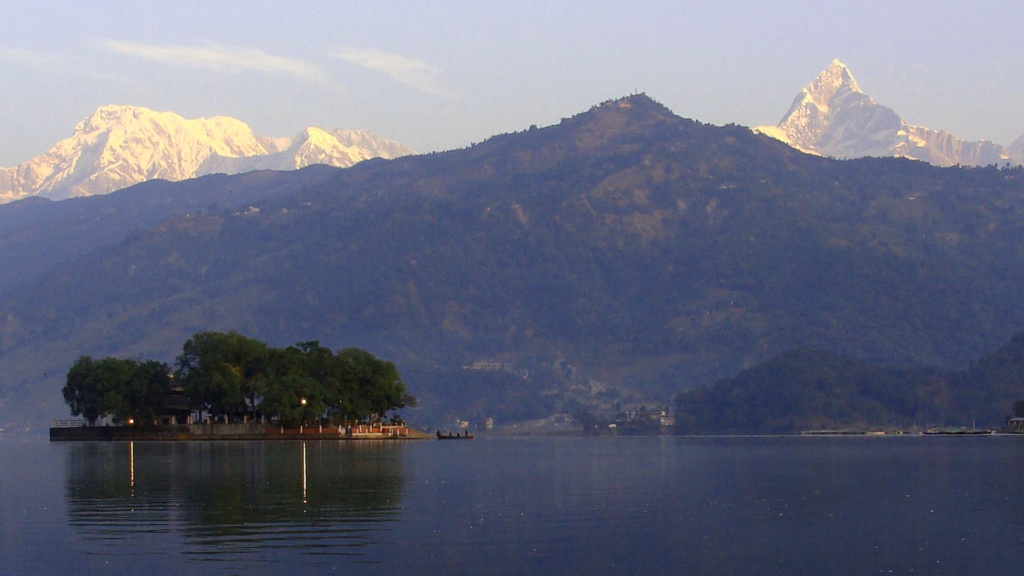
Pokhara
Learning the trail’s routine
The route unfolded in stages that were simple on paper and complicated underfoot.
Birethanti to Ulleri. Ulleri to Ghorepani. Ghorepani to Poon Hill and then to Tadapani. Tadapani to Chomrong. Chomrong to Dovan. Dovan to Deurali. Deurali to Annapurna Base Camp via Machhapuchhre Base Camp. Then the long return: ABC to Sinuwa, Sinuwa to Jhinu Danda, Jhinu Danda to Siwai.
Written like that, the trek sounds tidy. In the body, it was anything but. The days were measured in wet socks, stone steps, early tea, lodge rooms, sweat cooling too quickly, and the small negotiations of walking with other people. Stacy and I were new companions, so the first days also carried the delicate politeness of learning pace: when to talk, when to go quiet, when to wait, when to laugh at the absurdity of choosing a mountain path and then complaining about stairs.
Our guide moved with the unshowy competence of someone who knew the route as work, not adventure. He noticed weather before I did. He knew which teahouses had decent food, where the steps became punishing, when to move, when to pause, and when my confidence was louder than my legs.
Waste entered this rhythm slowly.
At first, it was background: bottles lined up beside lodge counters, biscuit packets hanging from shop rafters, instant noodle wrappers in bins, cigarette butts near rest stops, laminated menus offering the same comforts from village to village. None of it was shocking. That was the problem. It looked normal.
On the climb towards Ghorepani, I began to understand how much of trekking culture is built around quick relief. A cold drink. A packaged chocolate. A packet of chips. A bottle of water that requires no waiting, no conversation, no uncertainty. You pay, you open, you consume, you move.
The waste remains behind, even when you do not.
I had come prepared in the way travellers like to believe they are prepared. I had a bottle. I had intentions. I had the soft arrogance of someone who thinks awareness is the same as practice.
The trail corrected that. Practice is what happens when you are tired, hungry, damp and slightly irritable, and the easiest thing is right there on the shelf.
Boiled water and small refusals
My main change on the ABC trail was not dramatic. I started asking for boiled water.
Not always elegantly. Not always without hesitation. Sometimes I felt awkward asking. Sometimes I wondered whether it was worth the extra time. Sometimes the price made me pause until I remembered that fuel, labour and altitude all have a cost before they become a line on a menu.
Boiled water became part of the day’s rhythm. Request it at the lodge. Wait. Fill the bottle. Let it cool. Carry it carefully. Drink slowly. Repeat.
It was not glamorous. It did not make me pure. It simply made the act of drinking visible again.
At teahouses, I watched how supply moved. Bags of rice. Crates of bottles. Gas cylinders. Vegetables. Noodles. Biscuits. Tea. Everything had arrived because someone, somewhere, had carried it or arranged for it to be carried. The ABC trail is beautiful, but it is also logistical. Once I saw that, bottled water stopped looking like a harmless personal choice. It became part of a chain.
That chain included me.
I still wanted packaged snacks. There were moments on the climb from Chomrong to Dovan when a chocolate bar seemed less like a product and more like emotional infrastructure. There were damp, tired afternoons when the shine of plastic packaging looked like comfort. I did not always resist perfectly.
But I began to pause.
Could I eat what I had carried instead? Could I order something cooked at the lodge? Could I avoid buying another bottle? Could I carry the wrapper down if I did buy it? Could I stop pretending that a bin in the hills meant disappearance?
Stacy and I began carrying our own wrappers down. Then we started adding the occasional cigarette butt, paper scrap or plastic corner we found near rest points. The pouch became a running joke between us. She made fun of how seriously I inspected small bits of rubbish. I made fun of how quickly she had become an accomplice. Somewhere between Tadapani and Chomrong, the joke stopped being separate from the habit.
That is often how change works. It does not arrive as a sermon. It becomes a small repeated action, then a shared joke, then something you do without announcing it.
Higher up, less room for excuses
By the time we moved from Dovan to Deurali, the trail had narrowed my attention.
The forest changed. The air cooled. The walking became more concentrated. Above Deurali, towards Machhapuchhre Base Camp and Annapurna Base Camp, every step felt more deliberate. The body became a strict accountant. Water mattered. Food mattered. Warmth mattered. Weight mattered. A small packet in the wrong pocket annoyed me. A wet sock became a moral problem. The pack seemed to remember every unnecessary thing I had brought.
That is when waste became harder to ignore.
At lower elevations, litter could hide inside the busyness of villages, shops and lodges. Higher up, a wrapper looked lonelier. A cigarette butt on damp ground looked more deliberate. A piece of plastic tucked near a rock had no excuse left. There was no city to absorb it, no crowd to make it invisible.
At Annapurna Base Camp, the scale of the place made my own language smaller. Peaks stood around us with the kind of presence that makes people reach for cameras and then lower them again. I felt tired, damp, grateful, and slightly ashamed of how long it had taken me to understand something simple.
The mountain was not asking me for a speech. It was asking me not to leave rubbish behind.
That was all.
Not a manifesto. Not a new identity. Not a social media caption about conscious travel. Just the plain responsibility of carrying down what I had carried up — and, when possible, a little more.
That evening, I emptied my side pocket and looked at the day’s collection: bits of plastic, paper, cigarette butts, a few torn wrappers. It was not impressive. It was not enough to change the trail. It was only a small pile of evidence that I had stopped walking past every small thing.
Stacy looked at the pouch and joked about it again, but this time the joke had softened. It was no longer only funny. It was ours. A little unpleasant, a little ridiculous, and somehow important.
Our guide saw the pile too. He did not make a speech. He only gave the kind of nod that does not need to become a quote.
Sometimes approval is most useful when it is silent.
The descent and what stayed
The descent from ABC to Sinuwa was long enough to make the knees philosophical.
Nineteen kilometres on paper. In the body, it was more: stone, mud, repetition, tired thighs, the strange mental state that comes when the destination has been reached but the walking is not finished. Coming down, I noticed waste differently. Not more dramatically, just more often.
A wrapper near a lodge bench. A bottle cap under a step. A damp cigarette butt near a rest point. Paper softened by rain. Small things, easy to ignore individually, impossible to dismiss together.
By Sinuwa, the rubbish pouch had become part of the pack. By Jhinu Danda, neither Stacy nor I felt particularly virtuous about it. It was just something we did. By the time we walked the final stretch to Siwai, the habit had settled into the body: see, decide, pick up if practical, carry, dispose where possible.
This is the only kind of change I trust now — the kind that becomes dull enough to repeat.
When the trek ended, I had not become plastic-free. I had used plastic. I had wanted convenience. I had probably made choices I would make differently now. But I had also learned to see the trail as a shared place rather than a backdrop for my effort.
That distinction stayed with me.
Back in Pokhara, in the hostel where the whole coincidence of Stacy and me had begun, the trek came out of our bags in layers: damp socks, dust, receipts, tired clothes, wrappers, plastic pieces, paper and cigarette butts collected along the way. The room smelled of wet fabric, trail smoke and the stale honesty of a backpack that had done its work.
We spread the rubbish out briefly before disposing of it properly. It looked pathetic on the floor. Too small for the weight I had given it. Too ordinary for the lesson it had carried.
Then Stacy looked at my calf and made a joke about the tattoo there — the kind of joke that belongs only to people who have walked together long enough to be unreasonably familiar without needing romance to explain it. I am not putting the exact line in quotation marks because I do not remember it cleanly enough, but I remember what it did. It punctured the seriousness of the moment. It returned us to the body: sore legs, dirty socks, tattooed calf, shared laughter, and a rubbish pouch that had somehow become part of the trek.
That felt right.
Waste does not always need a grand ending. Sometimes it needs two tired people in a hostel room, laughing at a pile of wrappers before carrying it to the right bin.
The Annapurna Base Camp trek did not teach me to be perfect. It taught me to be less casual. It taught me that plastic-free is not a badge I earned but a direction I can keep choosing. It taught me that boiled water, fewer packaged snacks, a side pocket for rubbish, and the willingness to feel slightly inconvenienced are not grand acts. They are small repayments.
And it taught me that every trail begins before the first step — in what we buy, what we carry, what we refuse, and what we are willing to bring back down.