A September 2017 ride from Leh to Kargil by way of Khaltse, Bema, Garkone and Batalik
Somewhere above Skurbuchan, the Indus turns the color of a heavy idea
The ride announced itself through the rear tyre.
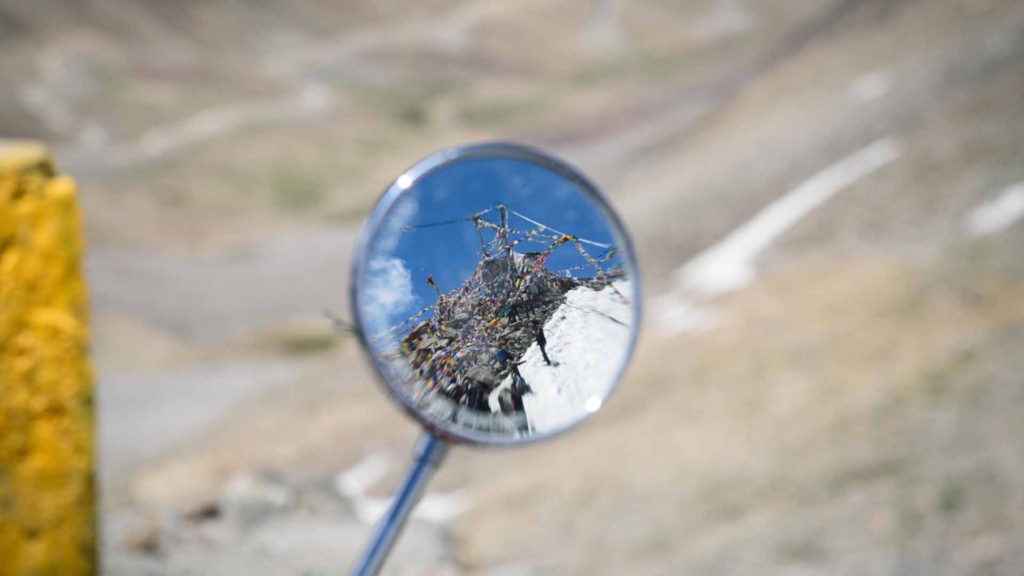
Not dramatically. Not with a cinematic skid or a clean pop. It was worse in the way small mechanical problems are worse: a faint looseness under the seat, a hesitation in the back of the motorcycle, the Royal Enfield Machismo beginning to feel as if it had developed an opinion of its own. I slowed, stood lightly on the pegs, sat again, and felt it once more. Soft. Not flat yet, but on its way.
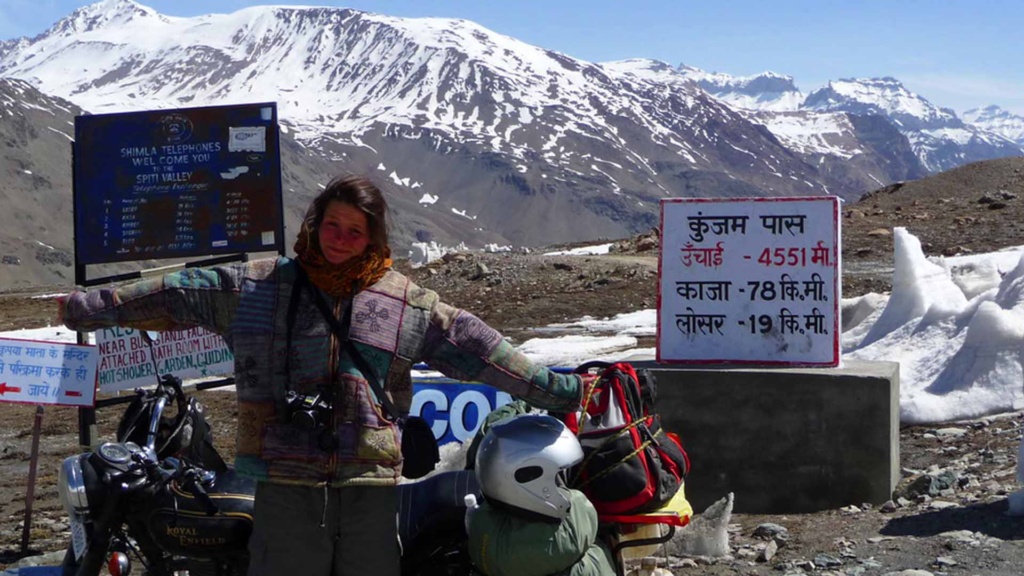
This was September 2017, and Joanna from Frankfurt and I were riding from Leh towards Kargil through the lower Indus route: Leh, Khaltse, Bema, Garkone, Batalik, then Kargil. The phrase “Brokpa country” had already collected too much tourist imagination around it by then flowers, coins, faces, myths repeated by people who had spent more time looking than learning. I did not want this ride to become another version of that. The road had other plans anyway. It gave us heat, dust, punctures, tea, fatigue, and enough gravel to keep culture safely behind the more urgent question of whether the tyre would hold.
We pulled over where the road allowed. Joanna got off and looked at the rear with the calm of someone who understood that panic does not inflate anything. I unpacked the kit: pump, plug, tools, the small objects a rider carries in the belief that preparedness can bargain with luck. The Indus was below us, moving with its usual indifference to human delay. Trucks passed when they could. A local rider slowed, checked that we were not stranded beyond sense, and moved on after a nod.
The first repair held, or seemed to. That is often the most dangerous kind of confidence: the temporary kind that feels permanent for the next thirty kilometres.
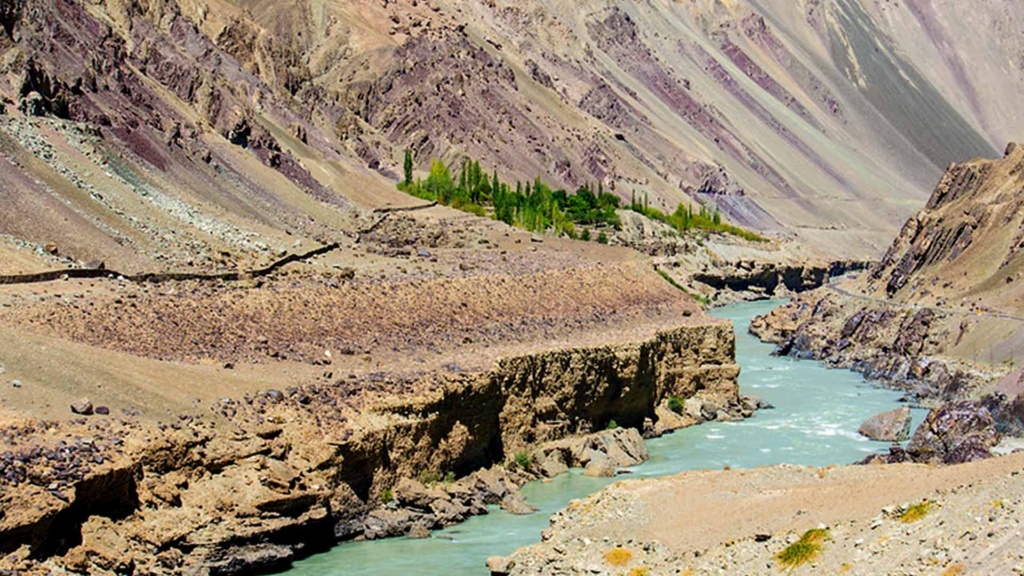
Indus
Down the Indus road
The ride had begun earlier in Leh with all the ordinary rituals that become important only later.
Fuel. Water. Straps tightened. Gloves found. Joanna checking her bag and asking the questions that make a ride better: how far, how rough, how much daylight, how much fuel after Khaltse. I had the overconfidence of someone who had ridden Ladakh enough to be corrected by it repeatedly and still needed one more correction.
The Machismo felt heavy but familiar, a motorcycle from a slower imagination of travel. It did not dart. It settled. Its engine note was not sharp; it carried itself with a kind of stubborn chest. That suited the road. Beyond Leh, the Indus accompanied us westward, sometimes close enough to feel like a companion, sometimes hidden behind bends, poplars, rock and the glare of afternoon.
By Khaltse, the ride had warmed into its actual mood. The morning cold had lifted. The road turned dustier, the landscape more pared down. We were moving through a corridor where river, road, fields, army movement, village life and old trade memory sit close together without becoming one story. That closeness is what makes the lower Indus route so easy to misread. It is beautiful, but it is not there for display.
After Khaltse, the riding became more physical. Gravel appeared in stretches. Loose patches collected where repairs, water and traffic had done their separate work. The front wheel asked for a lighter hand; the rear, especially after the first puncture, asked for suspicion. We kept stopping, not for grand viewpoints but for checks: pressure, straps, water, the slow accounting of a long day.
Somewhere along the route, a small roadside stop became necessary less for the motorcycle than for the riders. Tea arrived. Gur-gur cha first, then bread, then the sort of food that corrects the mood before it corrects hunger. Khambir, apricot jam, soup, thukpa the day carried these in stages, each bowl or plate attached to a room, a hearth, a pause, someone’s brief hospitality. I remember the warmth more clearly than the sequence. On difficult road days, memory stores heat before it stores chronology.
People asked where we were going. We answered: Bema, Garkone, Batalik, Kargil. The warnings were simple and useful. Go slowly. Watch the wind. Check the tyre. Do not rush the bends. No one delivered a speech. The best road advice rarely does.
Bema, Garkone and the work of arrival
Bema did not arrive like a destination. It appeared as a place already busy with itself.
That is one of the reliefs of travelling through working villages. They do not wait to impress you. A woman pours tea because tea is useful. A man points to the next stretch because you asked badly but sincerely. A child looks at the motorcycle with the professional attention children give to machines and outsiders. A dog makes a decision about your ankles and then loses interest.
The route through Bema and towards Garkone had the feeling of being held between river and rock. Terraces rose where land allowed them. Water channels carried their small authority through fields. Smoke stood briefly above houses before the wind took it apart. The road narrowed and widened according to needs older than our itinerary.
I am using Garkone here because that is the spelling I want this article to carry, though variants appear in public records and local usage. A parliamentary answer on Dard Aryan cultural identity lists Darchik, Garkone and Gurgurdo in Kargil district, and Dha-Beema and Hanu in Leh district, which is useful only as context for how these names appear officially; the ride itself remains a 2017 memory, not a current administrative guide.
Garkone was where the idea of “Brokpa country” became least useful and most human. There were houses, fields, tea, road dust, the fatigue of arrival, and people continuing with their day. The Brokpa/Dard context matters, but not as a spectacle. Research on the Brokpa of Dah–Hanu notes their Dardic language context and also describes the “pure Aryan” image as a tourism-perpetuated impression rather than a simple fact. That is the sentence I would rather carry than the brochure myth.
Inside one room, the hearth did what hearths do on road days: it lowered the body’s guard. Gur-gur cha came again. There was soup thick enough to feel like repair, bread, and the particular silence that follows the first few mouthfuls when riders stop performing toughness. Joanna laughed at something I said about the motorcycle, or perhaps at the state of me beside it. I had dust on my face, grease on my fingers, and the slightly foolish satisfaction of having arrived somewhere by making a machine keep its promise.
The people we met did not become symbols. That mattered. A host, a child, a woman at a hearth, a man giving directions they remain clearer to me when I do not force them into a lesson. They helped the day continue. That is enough.
Beyond “True Blood”: Unpacking the “Aryan” Myth in Brokpa Country
The second puncture
The second puncture was less dignified because by then I had started to trust the first repair.
It happened after we had already accepted the rhythm of the road: stop, check, ride, slow for gravel, stand slightly when needed, sit when the bike settled, look farther than the front wheel. Then the rear went soft again. This time the irritation arrived before the worry. A repeated puncture feels personal even when you know it is only rubber, thorn, stone, heat and bad luck.
We stopped near habitation, which was fortunate. Nawang appeared with the seriousness of someone who understood that a mechanical event had entered his jurisdiction. He watched first, then helped in the manner children often help best: by handing over objects, pointing at what adults pretend not to see, and giving the repair a public seriousness it might otherwise lack.
The second repair took longer. Dust stuck to the hands. The pump felt smaller than it had in Leh. Joanna waited with patience I had not earned. I checked the plug, pumped, waited, checked again. The tyre held. Nawang approved this without ceremony, which was more satisfying than praise.
By then the ride had shed any remaining romance. We still had Batalik and Kargil ahead. The road belonged to more than travellers: local traffic, families, supply vehicles, convoys, workers, animals, people for whom this was not adventure but movement. Military presence was part of the atmosphere in a general way, as it often is on borderland roads in Ladakh, but it is not something I want to turn into scenery. We kept to the road, kept the details ordinary, and moved on.
Batalik carried its own quiet weight. I knew enough not to hurry it into a paragraph of borrowed significance. The lower Indus route had memory in it, and a traveller passing through on a puncture-repaired motorcycle is not owed access to all of it. We stopped where stopping was appropriate, ate when food was available, and rode when the road asked us to keep moving.
The last stretch towards Kargil felt longer than the map suggested. Puncture days do that. Every wobble becomes information. Every patch of gravel becomes a question. The Machismo, to its credit, kept going with the stubbornness for which old Enfields are both loved and cursed. By the time Kargil came into reach, the day had moved from thrill to relief.
Washing off Garkone
The ride did not end for me when we reached Kargil.
It ended later, with water running off the motorcycle.
Washing a bike after a ride is a form of reading. The day returns in layers: pale dust from one stretch, darker mud from another, grease near the chain, the mark of a strap on the side panel, the places where your boot rubbed, the little cuts and lines you had not noticed when forward motion was the only concern. Garkone and the lower Indus came away slowly, not as memory but as residue.
The Machismo stood heavier than it had in the morning, though that was probably me. I washed the rear tyre longer than necessary, half expecting to find the second puncture still arguing. The plug had held. The day had held. Joanna and I had made it through without turning the ride into heroics, which is the best outcome a difficult road can offer.
People later asked about Brokpa country, and I never knew how to answer cleanly. I could have spoken about flowers and coins, about the myths outsiders bring, about the photographs people expect. But this ride gave me another answer first: gravel after Khaltse, a soft tyre, a child named Nawang helping with a repair, tea that steadied the hands, the Indus below the road, Bema and Garkone as lived places, Batalik passed with respect, and the slow satisfaction of washing the bike after reaching Kargil.
The water darkened under the tyres and ran towards a drain. Dust left the mudguard in thin streams. I wiped the tank with an old cloth, and for a moment the motorcycle looked less like a machine than a witness that had chosen not to exaggerate.
That felt right. The road had been difficult enough. It did not need embellishment.
You think you’ve learned the road.
The road asks politely if you’ve learned yourself.