A motorcycle journey that began as a two-day plan and reached Leh five days later
Leaving Zangla with a two-day plan
The mistake began with a clean line on a map.
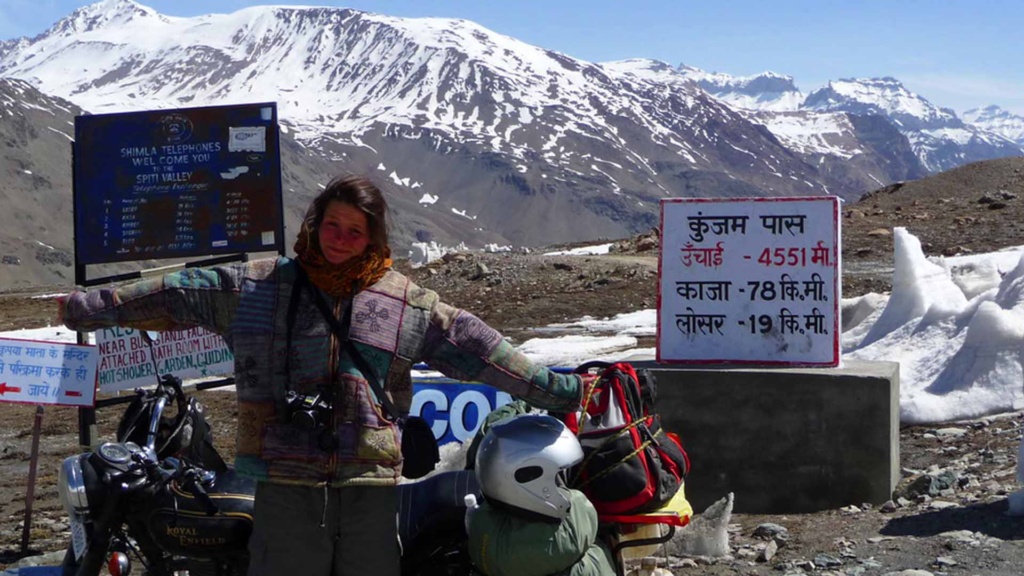
In August 2016, Cecilia and I looked at the route from Zangla towards Lamayuru and made the kind of estimate that only makes sense before the road has been allowed to speak. Zangla, Singge La, Sirsir La, Lamayuru, Leh. Two days, perhaps three if we behaved sensibly. We had two Royal Enfield Himalayans, enough confidence to be dangerous, and just enough recent mechanical trouble to keep the confidence from becoming entirely stupid.
The bikes had already demanded attention: cables after Sani, patched tubes, the small rituals of tightening, checking, adjusting and pretending that a rope around a jerrycan is not a philosophical question. We were self-funded, carrying our own decisions, and the road ahead had no obligation to make them look intelligent.
Zangla was our threshold. The fort watched from above. The Zanskar moved below with that low, steady voice rivers use when they have seen more hurry than they respect. We had tea, khambir, and a conversation about timing that felt casual then and important later. An auntie’s advice was simple and exact: “Good if your morning is good. Don’t give your afternoon to it.”
I remember Cecilia smiling over her cup when I said two days again. “You know it won’t be two,” she said.
She was right, which became more irritating with every pass.
We left Zangla with the bikes still clean enough to look optimistic. That did not last. The track rose out of the valley through dust, stone and loose sections where the Himalayans needed steady hands more than enthusiasm. The first day’s movement towards Lingshed took us through Murgum La and Kiupa La country, and the road made it clear early that speed would only create more work. First gear, second gear, clutch hand, loose arms, eyes looking beyond the front wheel but never too far ahead. The old instruction returned: ride what is under you, not what the map has promised.
When Winter Is a Classroom: Learning in Zangla Fort’s Shadow
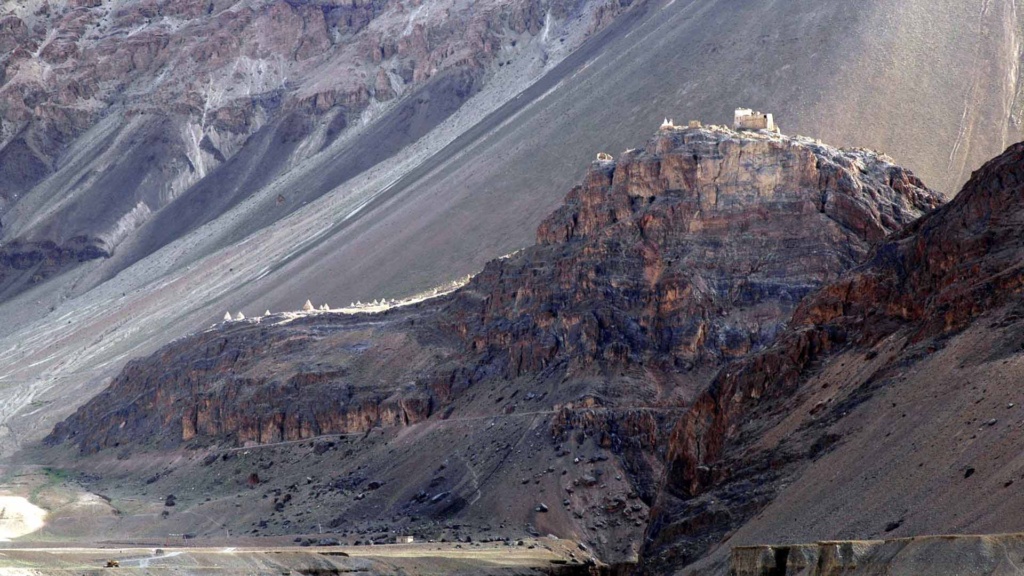
Zangla Fort
Lingshed and the extra night
Lingshed arrived with the relief of a place that did not need to impress us.
We parked where the bikes could finally stop ticking hot in the sun. The monastery scene happened much as it remains in memory: bells, quiet rooms, thick socks, the sense of a settlement holding both age and change without turning either into a slogan. A monk spoke about the new road and how it had changed winter movement, supplies and worries about waste. “Good and not-good,” he said. It was one of those lines that sounds too neat until you realise it came from someone who had to live with both halves of it.
We had thought of pressing on. The mountains did not approve. Wind rose, dust moved hard along the ridge, and the road ahead looked less like a route than a negotiation we were too tired to win that evening. We stayed.
That decision changed the journey. The two-day plan had already begun to loosen, and by morning we were riding not towards efficiency but towards the next workable halt. The road crew, the weather, the passes and the condition of the track pushed us into the longer line: from Lingshed towards Yulchung, through Kong La and Chochogori La, with the day asking for more attention than bravado.
Kong La required careful riding rather than drama. Scree and loose stone punished overconfidence. The rear wheel shifted when the throttle got impatient. Cecilia’s voice cut through the wind once “Left line, left line!” and I moved just in time to avoid a rut that had been waiting with professional calm. We laughed afterwards, mostly because laughter is what riders do when a mistake has passed close enough to be useful.
Chochogori La was less severe but not easier. Clouds gathered in the distance. A shepherd pointed us towards Yulchung with the kind of direction-giving that assumes you know how to read landscape better than you probably do. He also mentioned Shalang Pa, and by then any homestay name sounded like a promise.
Shalang Pa in Yulchung was a house before it was lodging. A courtyard, apricots, a stove, salt tea, khambir, potatoes, the smell of warmth after dust. The grandmother, the spindle, the wool, the radio, the water channel outside all of it belonged to the evening because none of it was arranged for us. We were simply tired travellers being folded into a working household for a night.
I slept hard there, the way you sleep after a day when the road has used every small muscle you forgot to respect.
Singge La to Photoksar
The road to Singge La began with that clean morning confidence that is never entirely trustworthy.
The light was good. The bikes started well. The air felt sharp without being cruel. For half an hour, we almost believed we had recovered our original plan. Then the switchbacks began to collect themselves properly, and the pass reminded us that optimism is not traction.
Singge La earned its place in the journey not by spectacle but by the concentration it demanded. The climb tightened. The wind moved in rough pushes. We rode standing in places, seated in others, the Himalayans finding grip where the surface allowed and complaining where it did not. I remember touching the small Hanuman idol on my handlebar at the top and smiling at my own superstition. At altitude, even a rider who claims to be rational will accept backup from brass, thread, flags, luck and whatever else is within reach.
Cecilia whooped at the pass. The sound disappeared almost immediately into the wind, but it changed the mood. For a few minutes, the delayed plan did not feel like failure. It felt like a better version of the ride had finally introduced itself.
Bumiktse La came after that, less ceremonial and more practical. The road towards Photoksar had its own rhythm: rough patches, open views, sections where the track seemed to rest before finding another climb. Marmots appeared on warm stones and vanished before we could make them into a story. A BRO sign made its joke about hard work, and for once I did not dismiss it as roadside humour. In that landscape, humour is another tool.
Photoksar looked almost theatrical after the day’s riding: white stupa, houses gathered with purpose, fields and stone, a village that seemed to know exactly where afternoon should fall. We stopped at the tea shop with the seriousness of people who had earned Maggi beyond irony. Salt tea followed, and then a room above the shop where the walls were thin and the quilt was not.
Rigzin Dolma was real and publishable, and she remains one of the clearest details of that halt. She corrected my pronunciation of Bumiktse with more patience than I deserved, practising her tables by the window while we tried to look less destroyed by the day. It is difficult to remain heroic when a child can correct your geography and arithmetic in the same sitting.
That evening, Photoksar did not need a grand description. Women moved water. Men discussed work. Children turned scree into games. The bikes stood dusty and temporarily forgiven. We had left Zangla thinking of distance; by Photoksar, we were thinking in halts, weather, hands, rooms and whether the next morning would let us pass.
Phonjila, Wanla and Lamayuru
Sirsir La came the next day with less drama than Singge La but no less demand.
The climb was practical: stone, bends, wind, the usual arithmetic of clutch, throttle and patience. We did not linger at the top. Some passes invite ceremony; others seem to say, keep moving before your luck notices you have stopped.
The descent towards Phonjila changed the texture of the day. The hard riding opened into a more inhabited rhythm: walls, apricots, softer light, lanes that made the bikes feel large and slightly rude. Then Tashi appeared.
That reunion happened on this journey, and his name may remain. He waved us down with the certainty of someone who already knew we would come in. I braked, Cecilia followed, and in a few minutes the road had turned into a friend’s kitchen. His home smelled of cumin, solid roofs and relief. The room was ready in that way mountain homes sometimes are not because you announced yourself properly, but because kindness prefers to prepare before being asked.
His daughter drew the two bikes in my notebook better than I could have drawn them myself. We passed the notebook around. Dinner became longer than planned. Tashi spoke about roads, porter work, the Chadar changing, and the way change brings help and trouble in the same bag. I am keeping this as conversation, not thesis. He was not there to provide an essay. He was a friend giving us shelter and a night that the route had not promised.
From Phonjila, we rode to Wanla. The land softened into old stone and monastery quiet. Wanla gompa was real, as was the visit inside. The rooms held shadow, paint, old devotion and the kind of stillness that makes motorcyclists aware of their dust. We did not need to explain it. We only needed to enter carefully, look with restraint, and leave without pretending the place had been waiting for us.
Lunch at the blue-painted shack happened too: dal, rice, hunger doing most of the seasoning. Then the road carried us towards Lamayuru, whose landscape always seems to arrive before the village does. Pale eroded folds, the monastery fixed to its height, guesthouses, lanes, wind, prayer flags thinning themselves on purpose. We took a room, and the window gave us the moonscape without asking us to perform awe.
Lamayuru has its own fuller story elsewhere, so I will not make this section carry all of it. That evening was simple: tea outside, the body loosening after several days of riding, the knowledge that five days had replaced two, and Cecilia saying, almost softly, “Five days.”
“Five days,” I said back.
There was nothing else to add.
Leh, hot water and butter tea
The road from Lamayuru to Leh felt almost too easy at first.
After five days of rough track, passes and village halts, the highway seemed excessive in its confidence. Grip, width, speed, traffic, the ordinary arrogance of a road that believes it knows where it is going. We still rode carefully. The body does not forget loose stone immediately just because asphalt appears.
We passed familiar places with a different kind of attention: Wanla behind us, Lamayuru settling into memory, the approach towards the Indus, the confluence near Nimmu, Basgo’s ruins, the road pulling us back towards Leh. At Saspol, breakfast had the authority of necessity. Parathas, tea, and the simple luxury of sitting without calculating the next pass.
By the time Leh took us back, the bikes were carrying five days of dust and the two of us were carrying the quieter version of fatigue that comes after the ride is nearly over. We rolled into the guesthouse courtyard where the journey had once been a line in conversation. The Himalayans looked less like machines than witnesses. Cecilia bumped my shoulder with her helmet and repeated the old joke without needing the full sentence.
“Two days, ha?”
I had no defence.
The hot bucket bath in Leh was the true arrival. Not the final pass, not the highway, not the guesthouse gate. Hot water poured into a bucket, dust leaving skin, fingers discovering cuts and bruises they had been too busy to report, the body learning again what softness was. I washed slowly, as if the ride might come off in layers: Zangla dust, Lingshed wind, Yulchung smoke, Photoksar salt tea, Phonjila warmth, Wanla stillness, Lamayuru moonstone.
Later, Cecilia and I sat with hot butter tea and discussed the days as they had actually gone, not as we had planned them. We named the passes one by one, argued gently over which bend had been worst, laughed about the mechanical fuss, remembered Rigzin Dolma correcting me, Tashi’s house, the Shalang Pa stove, the auntie’s warning in Zangla.
The line on the map had been clean. The ride was not. That was the better story.
“Return is not repetition; it is a reading with better light.”