A few days beside Karzok, where the lake was never separate from the village around it
The first sight of Tso Moriri did not arrive as stillness. It arrived with dust on my visor, stiffness in my knees and the dull after-sound of a motorcycle that had been working for too many hours.
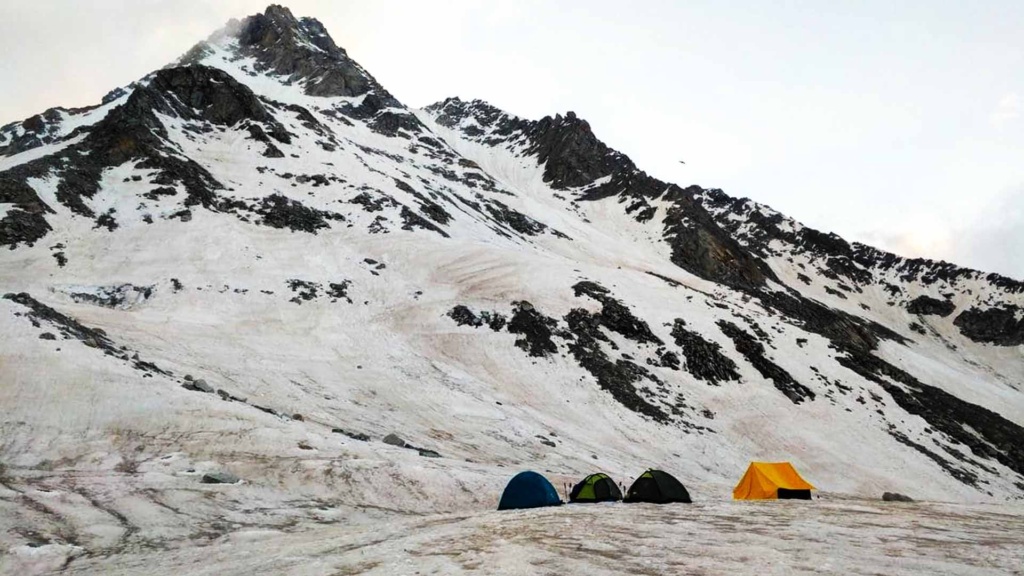
Stacy and I reached Karzok on 4 July 2018 after riding up from the Manali side through Sarchu, carrying that familiar mixture of fatigue and excitement that long Himalayan approaches produce. We were both on our motorcycles, dusty, stiff and slightly overawed by the sudden blue of Tso Moriri opening beside the village. The road had already taken enough from the body by then: heat lower down, cold higher up, wind across the open ground, the slight metallic taste that altitude leaves in the mouth before you admit it is affecting you. By the time the village appeared near the lake, I was not thinking in metaphors. I was thinking about where to stop, where to pitch the tent, and whether my hands would remember how to untie luggage without dropping something important.
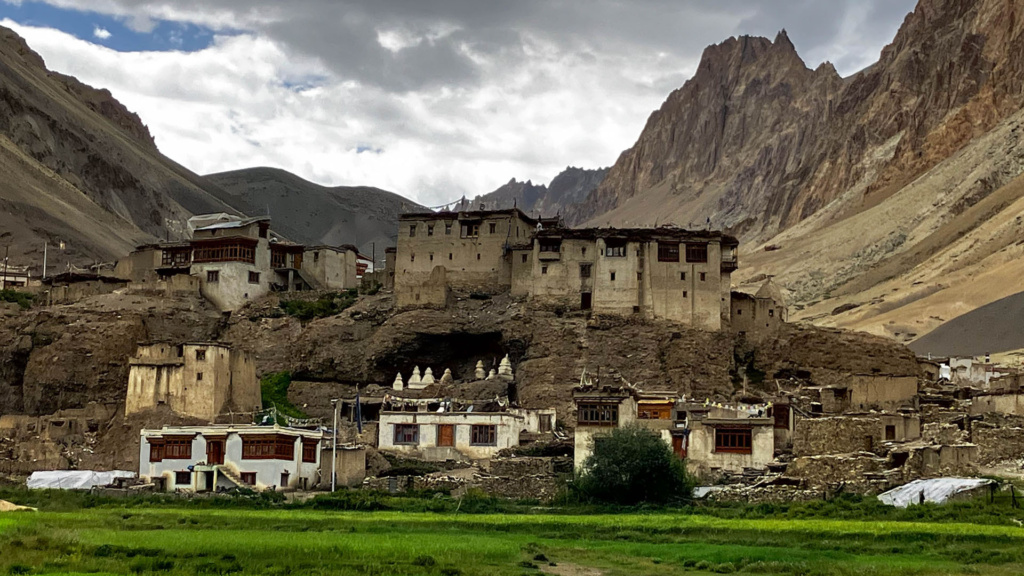
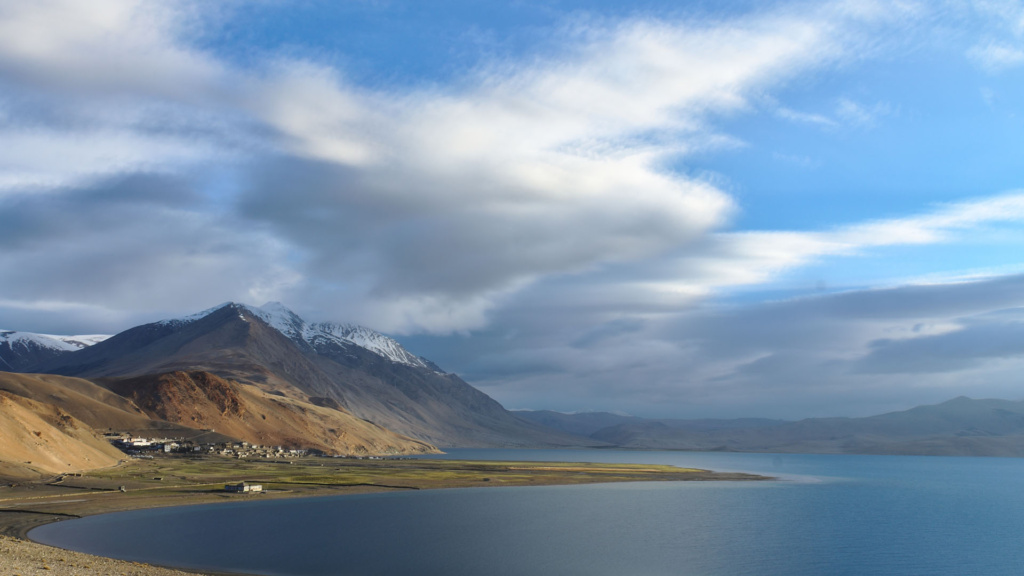
The lake was there, of course. Long, blue, held between brown mountains and a sky that seemed too large for the frame of the helmet. But what I noticed first was not emptiness. It was use. Karzok was not a settlement placed beside scenery for travellers to admire. It had smoke, animals, people walking between tasks, prayer flags, stone walls, motorcycles, ponies, goats and the small negotiations by which a village absorbs visitors without becoming made for them.
We pitched our tent in a local woman’s pasture, self-funded and simple, with her permission. That detail matters because it changed the way I understood the place from the first evening. We were not checking into a room that could pretend the lake belonged to us for a night. We were borrowing a corner of someone’s working ground. Around us, changra goats moved in pale clusters, ponies shifted against their ropes, and rebo tents sat low against the wind, their dark fabric making the landscape look inhabited in a way no viewpoint photograph can hold.
I had come expecting Tso Moriri to be beautiful. That was the easiest expectation to satisfy. What I had not expected was how quickly the lake would become inseparable from everything around it: Karzok, the monastery, the animals, the pasture, the people arriving for prayers, the wind deciding when a cup of tea should cool, and the road that had brought us there with dust still caught in our jackets.
A Lake With Work Around It
The next morning, I walked towards the water slowly, partly out of reverence and partly because altitude makes false poets of us all. You pause, and it feels like contemplation. Often it is just breath asking for more time.
The shore was not soft. It was stone, grit, cold water and wind, the kind of ground that instructs the ankles before the mind has anything useful to say. From a distance, Tso Moriri looked calm enough to deserve every mirror cliché ever wasted on a lake. Up close, it was full of small movement. Ripples shifted across one section while another lay flat. The colour changed with depth and cloud: blue in the deeper reaches, green where the bed lifted, steel where the wind pressed harder.
A few bar-headed geese moved along the water with the contained confidence of birds that did not need my attention. Farther from the shore, the mountains held their own silence, though silence is not quite the right word in Changthang. There is always something: hooves on stone, a bell from an animal’s neck, a raven’s rough call, canvas moving in the wind, someone calling across a pasture, the small clatter of cooking vessels from a tent or house.
Stacy and I spent those days less as lake-watchers than slow residents of our borrowed patch. We checked the bikes, adjusted the tent, looked for warmer layers, accepted that the wind would have opinions about everything, and tried to learn the daily rhythm without pretending we belonged to it. In the open plains nearby, kiang ran or moved along the landscape with an alertness that made our motorcycles feel clumsy. They were not there for our wonder. They were simply part of the place, and we were passing through.
The woman whose pasture we camped in appears in my memory through practical gestures rather than any grand conversation. She allowed us space, answered what needed answering, and moved through her work with the efficiency of someone whose day was not organised around our arrival. That is harder to write about than a symbolic welcome, but it is truer. She was not there to explain the lake to me. She was living beside it.
That difference corrected the article I might once have written. Tso Moriri was not pristine emptiness. It was not a private mirror waiting for a traveller’s feelings. It was an inhabited high-altitude lake with work around it, animals around it, prayers around it and weather moving through everything.
The birthday prayers
On 6 July, Karzok gathered for prayers for the Dalai Lama’s birthday.
I knew this because people around us said so plainly, without turning it into an event brochure. The day did not feel staged. It felt like a village and pastoral community folding a date into their own rhythm. People came towards the monastery in small movements rather than one grand procession: families, older people, children, monks, women carrying or arranging what needed to be carried or arranged. Ponies stood nearby. Goats drifted around the edges of the human business as if they were accustomed to being almost, but not quite, excluded from ceremony.
The monastery courtyard held sound differently from the open shore. Outside, wind scattered everything. Inside the gathering, sound collected: horns, drums, low voices, feet, the rustle of clothing, metal cups, children being children despite the seriousness adults try to give a day. I remember white scarves, offerings, butter lamps, the smell of smoke, and the way people made room for each other without much announcement. I do not remember the exact words of prayers, and I will not pretend I understood more than I did. I knew enough to stand quietly and not get in the way.
This is where the old temptation appears: to make every gesture mean something larger. A monk lifts a bowl, and the writer wants to call it timeless. A child laughs, and the writer wants to turn it into a thesis about joy. But most of what moved me that day was ordinary. Someone adjusted a cloth. Someone passed food. Someone shifted to make space. A child was distracted. An older person watched the crowd with the patience of someone who had seen many such mornings.
There was food, too, though not in the exaggerated abundance memory sometimes creates to flatter itself. I remember tea, festival snacks, and the small hunger that comes from standing in cold wind before the body has decided whether it is morning or labour. A boy offered me churpi, hard cheese that made my jaw work harder than expected. He laughed at my difficulty, which was fair. Some foods are less eaten than negotiated, and I was clearly not winning.
Later, near the water, I saw an older monk standing quietly. I do not have a perfect sentence from him, and I do not want to invent one. What I remember is the smallness of the gesture: something offered towards the lake, a pause, a return to the path. It stayed with me because it was not theatrical. The lake was part of the day, but not in the way a traveller might arrange it. It was part of where prayer, weather and habit met.
The days beside the water
Because we stayed from the 4th to the 8th, Tso Moriri had time to change shape without us moving anywhere. That is the advantage of not treating a lake as a single viewpoint. Morning made it pale and almost withdrawn. Midday sharpened it, the wind worrying the surface into texture. Evening brought colour back to the slopes and made the village sounds travel differently. Night simplified everything: cold, canvas, stars, the knowledge that the motorcycles were parked nearby and the lake was still there even when the tent flap was closed.
A grandmother is part of those days in my memory. I will not make her carry wisdom she did not volunteer, but I remember her presence near the human edge of the lake: older hands, weathered attention, the kind of face that makes a traveller aware of how temporary his own discomfort is. She watched things with an economy I envied. The animals, the children, the movement near the pasture, the visitors like us trying to be respectful and occasionally failing by being too eager.
There was humour in the stay, too, because reverence without humour becomes unbearable. The goats were excellent at interrupting solemnity. One investigated the edge of our camp with the entitlement of a local official. A raven called from somewhere nearby with the rough confidence ravens carry everywhere, as if it had reviewed all human behaviour and found it mostly repetitive. Even the wind seemed to take pleasure in badly timed gusts, especially when tea was involved.
I walked the shore more than once, each time expecting repetition and getting variation. The stones changed underfoot. The waterline shifted by mood or angle. The geese appeared and disappeared. The lake did reflect the mountains, but reflection was not its most interesting quality. What mattered was not that the lake mirrored the world; it was that it refused to separate beauty from use. A tent rope, a hoofprint, a prayer flag, a plastic bottle someone should have carried away, a bird lifting off, a child at the edge, the monastery above all of it belonged to the same frame.
That changed how I photographed. I still took pictures, of course. I am not going to pretend I became pure in the presence of blue water. But I became more cautious about what a frame can lie about. If you crop Tso Moriri too tightly, it becomes an untouched dream. If you stand back, the lake returns to its real life: Karzok, herders, animals, prayer, weather, road, dust, and visitors like me trying to decide how quietly to move.
Leaving through Puga
We left on 8 July.
Departure began with the least poetic parts: shaking dust from the tent, folding fabric that refused to fold cleanly, checking straps, loading the motorcycles, looking once more around the pasture to make sure we were not leaving behind anything that did not belong there. The woman whose ground had held our tent remained part of that morning’s practical geography. There were thanks, arrangements, gestures of departure. Nothing needed to be inflated.
Stacy finished strapping down her luggage while I checked the tent site one last time, looking for stray pegs, wrappers or anything that did not belong in the pasture. The motorcycles started with that ordinary relief machines give when they agree to continue the story. Karzok began to fall behind us in fragments: a wall, a turn, the lake appearing again between slopes, then widening, then slipping out of view as the road took charge. I looked back more than once, not because the lake had become a metaphor, but because it is difficult to leave a place that has taken several days to enter properly.
We rode out via Puga, where steam rose from the ground in pale, restless breaths. After the open blue of Tso Moriri, Puga felt like another element speaking up: mineral, heat, earth, the smell of something older and less gentle than lake water. We did not linger long enough to make a study of it. The road was still ahead Nyoma, then onwards towards Yaye Tso, and eventually Merak at Pangong but the steam marked the departure more clearly than any farewell sentence could have done.
On the bike, leaving the lake, I felt the usual confusion after a long stay in a short place. Four days is not enough to know somewhere, but it is enough to stop treating it as an image. Tso Moriri had not become mine. That was the point. It had become more itself: a lake beside Karzok, a village beside weather, a pasture beside prayer, a blue body of water around which people and animals continued their own work after our motorcycles moved on.
The road lifted and turned. The steam thinned behind us. Dust returned to the visor. Ahead, the Changthang opened again, wide enough to make the bikes look temporary. I kept riding, carrying no stone, no perfect sentence, only the feel of cold water near the shore and the sound of tent pegs coming loose from someone else’s pasture.
Tso Moriri teaches you to accept the version of yourself that water does not edit.