A ride across the high plateau, where fuel, wind and distance made every decision physical
Fuel before distance
The fuel gauge began lying before the road became lonely.
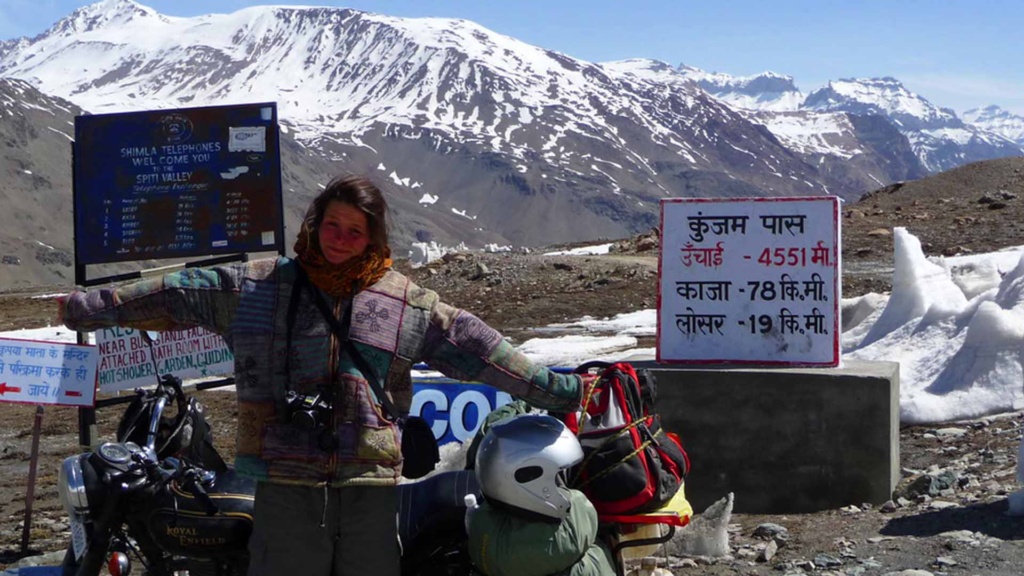
That is how I remember the Changthang in June 2015: not as a grand empty landscape, but as a set of small negotiations between wind, fuel, animals, weather and the old Royal Enfield Classic under me. Stacy and Gabriella were riding with me, and between the three of us there was enough optimism to make the jerry cans look like planning rather than fear.
We had left Leh with the usual ritual of overchecking everything. Chain, clutch, cables, tubes, tools, water, biscuits, ORS, spare layers, permits folded away without turning them into conversation. I had been posted in Ladakh long enough by then to have made many small trips inside the district, enough that I sometimes said “twentieth trip” with the arrogance of a man who should know better. Familiarity helps in Ladakh, but only until the road decides to examine it.
The plan was a loop that looked clean on paper: Leh to Upshi and Karu, then Chumathang and Mahe, towards Nyoma, Loma and Hanle, onwards to Yaye Tso and a Changpa camp, then Tso Moriri and Karzok, before returning through Sumdo, Puga, Tso Kar, Debring and Tanglang La. Even written now, it feels too tidy. On the ground, it was heat, dust, thin air, cold evenings, jerry cans strapped badly, gloves coming off at the wrong time, and the constant arithmetic of how far the next known fuel might be.
The Changthang is often described as a high-altitude cold-desert region, and official tourism material places the Changthang Wildlife Sanctuary at around 4,500 metres with wildlife including kiang and black-necked crane. That context is useful later; on the motorcycle, what mattered first was simpler the distance between where we were and where help might be.
Changthang
Towards Hanle, with the sky getting wider
The road out of Leh still had the comfort of recognition.
Karu, Upshi, the Indus running beside the road, the familiar roadside pauses where tea tastes less like refreshment and more like insurance. Past Chumathang, the land began opening out. Steam and mineral smell near the hot springs gave way to wider emptiness, and by Mahe the ride had become less about direction and more about judgement. Permit checks were part of the day, but I am keeping those details general. This was an old journey, not current travel advice.
After Mahe, the road entered a different scale. The horizon stretched and lowered at the same time. Wind moved across the plateau with enough force to make the shoulders work. The Classic was not a fast motorcycle, but that was one of its virtues here. It thumped along with a stubborn steadiness that suited the surface better than haste would have.
Nyoma gave us a night halt and the first real sense that we were no longer riding between destinations so much as between possibilities. Fuel, light, weather and energy mattered more than ambition. At Loma, the route towards Hanle pulled us into a more exposed country. We saw kiang at a distance, bodies held with the calm confidence of animals that had no reason to respect our engine noise. Dogs appeared near habitations, suspicious but not dramatic. Ravens worked the wind better than any machine could.
Hanle remained a brief stop in this article because it belongs more fully elsewhere. The Indian Astronomical Observatory is in the Hanle Valley of Changthang, and official IIA material describes the site as a dry, cold desert with sparse population and Hanle monastery nearby. I saw enough of Hanle’s sky and quiet to remember it, but this ride was not about staying there. It was about continuing.
Tsering’s name stays because she was real and publishable, but the scene does not need to become another Hanle essay. We slept, ate, checked the bikes, checked the fuel, listened to the wind and prepared for the next open stretch.
The wrong turn to Yaye Tso
Yaye Tso arrived because of a wrong turn.
Somewhere beyond the known line of the day, a track thinned away from the more sensible road. It did not look like a decision at first. It looked like a possibility. That is how bad ideas often enter motorcycling: not loudly, not foolishly, just plausibly enough for curiosity to get a vote.
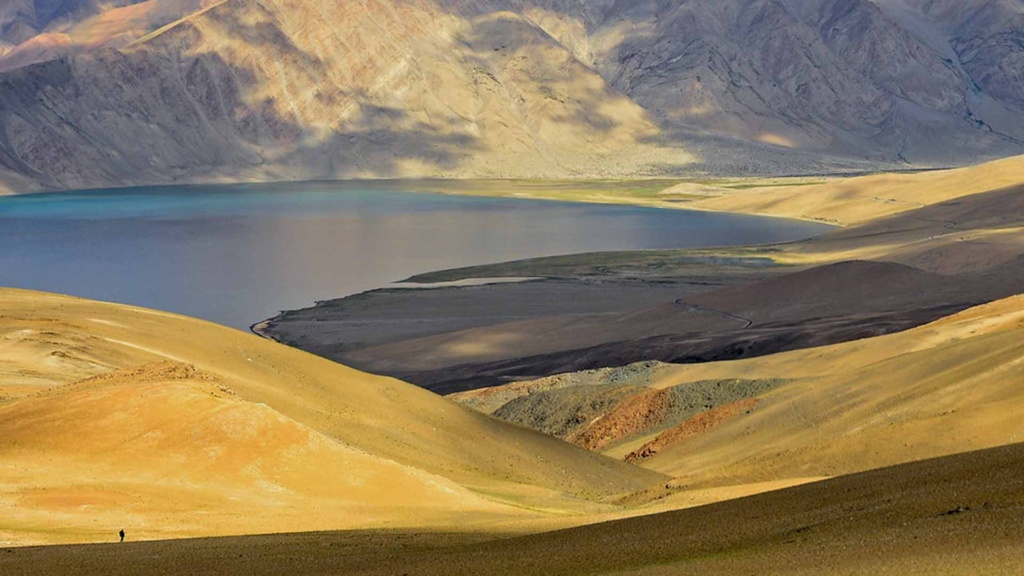
We followed it until the land opened into a bowl of blue water. At the time, I did not know the name. The lake had no need to announce itself. It was still, dark, and more private than the larger lakes travellers talk about. We stopped the bikes and let the engines die. Silence arrived quickly, as if it had been waiting for the machines to shut up.
A shepherd appeared and gave us the name: Yaye Tso. He also used the word “crater,” which I am keeping only as something he said, not as a geological claim. I had no knowledge to verify it then, and I do not want the article to pretend otherwise. What mattered was not classification. What mattered was that we had ridden into a place we did not understand and were being gently shown how not to make it worse.
The ground near the edge was soft in places. The shepherd warned us away from a marshy stretch with the efficient seriousness of someone who did not need more words than necessary. We listened. That was one of the better decisions of the ride.
The puncture came towards Yaye Tso, as if the road wanted payment for the detour. Rear tyre, tools out, hands in dust, the usual small theatre of motorcycle humility. There is nothing romantic about a puncture at altitude. It is labour, irritation and hope in equal measure. Stacy and Gabriella waited while I worked through the repair. The tube, the patch, the pump, the checking, the listening for air. Every rider knows that silence after a repair can be either reassurance or deception.
This time, it held.
I remember looking back once before we left the lake. The water did not look discovered. It looked briefly tolerated by our presence. That distinction stayed with me longer than the photograph would have.
Camp, animals and weather
The Changpa camp was not a cultural stop arranged for a story.
It was a halt in a working landscape. Rebo tents, goats, yaks, dogs, wind, tea, tsampa, hands busy with fibre and animals moving in their own logic. Stanzin was real, and I am keeping his name because you confirmed it may remain. He did not become a symbol for me. He was a herder in the middle of a day that had its own work before we entered it.
The changra goats were restless in the way goats are restless everywhere, though here the wind gave them more drama. Yaks stood with that heavy, immovable patience that makes a motorcycle seem like a nervous invention. A girl handled pashmina fibre with more ease than I had managed with tyre tools. We ate, drank butter tea, tried not to ask questions too large for the room, and left with more respect for the labour behind the word “pastoral” than any definition could have given us.
Animals kept appearing through the ride as sightings rather than spectacle. Kiang from the road. Marmots rising and vanishing near the flats. Ravens over open ground. Cranes near the wetter landscapes. Bar-headed geese too, where water and season allowed. I am not turning any of these into a wildlife guide. They were seen from the road, at a distance, and they belonged to the plateau more completely than we did. Official sources describe Tso Moriri and the Changthang region as habitat for species including black-necked crane, bar-headed goose, kiang and marmots; my article uses that only as background for what we actually saw.
The weather corrected us near Karzok and Nyoma.
Wind came first, then hail, then snow sharp enough to make the visor sound like a tin roof. The road surface changed character in minutes. The body shrank into the ten metres ahead. Hands loosened because gripping hard makes a motorcycle worse. Shoulders lowered. Speed dropped. Nobody spoke much.
At one point, BRO workers gave us tea while we waited out the worst of it. That scene deserves to stay because it was not dramatic in the way travel writing usually wants mountain weather to be dramatic. It was practical. Men doing road work in ugly conditions. Riders cold enough to be grateful. Sweet tea in hands that had briefly lost some feeling. A sky being watched because nobody trusted it.
When the weather moved on, it did not apologise. The plateau simply changed expression and expected us to continue.
Lakes, salt flats and the road back to Leh
Tso Moriri appeared later with its own gravity.
Karzok was a night halt, but I am keeping it brief here because the lake has its own article. Tso Moriri does not need another long description from me in this piece. It needs only its role in the ride: arrival after fatigue, a bed, food, wind outside, water holding the evening, and the knowledge that morning would send us out again.
Tso Moriri: The Mirror That Remembers You
From Karzok, we rode towards Sumdo and Puga, where the earth announced itself through steam and mineral smell. Then came Tso Kar, white-edged and wind-scoured, a lake that felt closer to salt, dust and open sky than to the blue drama people expect from Ladakh water. Official Ladakh Tourism describes Tso Kar as part of the Changthang region, and that matches how it felt on the ride: less like a scenic detour and more like the plateau continuing in another form.
The fuel anxiety returned in earnest along the Hanle side of the journey, where petrol from a blue drum became less a colourful travel detail and more a necessary fact. We had carried jerry cans, but carried fuel has a way of disappearing more quickly in the mind than in the tank. The woman at the tea tent sold what we needed without turning need into theatre. Petrol was siphoned, paid for, carried carefully back into the day. I remember the smell on my hands long after the road resumed.
By Debring, tiredness had become quieter. The More Plains stretched wide enough to make speed feel foolish. Tanglang La waited with the old authority of a pass that has seen too many travellers think the hard part is over. The Classic climbed without grace but with persistence. Stacy and Gabriella rode with the same fatigue I felt: not the heroic kind, just the honest kind that accumulates in wrists, knees, lower back and concentration.
The descent towards Rumtse and then the road through Gya, Upshi and Karu brought the world back in layers: more houses, more traffic, more tea possibilities, more sense that we were re-entering the map other people recognised. By the time Leh approached, I no longer wanted a conclusion. I wanted to stop.
We rolled into Leh in the evening with the dust of several kinds of road on the bikes and the silence of people who had used up their clever sentences. The jerry cans were lighter. The chain needed attention. My face felt burnt by wind and sun. The Royal Enfield ticked as it cooled, metal making small sounds in the guesthouse yard.
That was the ending: not wisdom, not victory, not even relief arranged into language. Just three riders back in Leh, a motorcycle cooling under a tired sky, and the plateau still somewhere behind us, large enough to make the whole ride feel both immense and very small.
Some places you don’t discover. They permit you briefly and then teach you how to leave.
– Yaye Tso