Notes from a September 2015 night of cold breath, warm kitchens and a sky I did not yet know how to read
The white domes on the hill
The observatory appeared before the stars did.
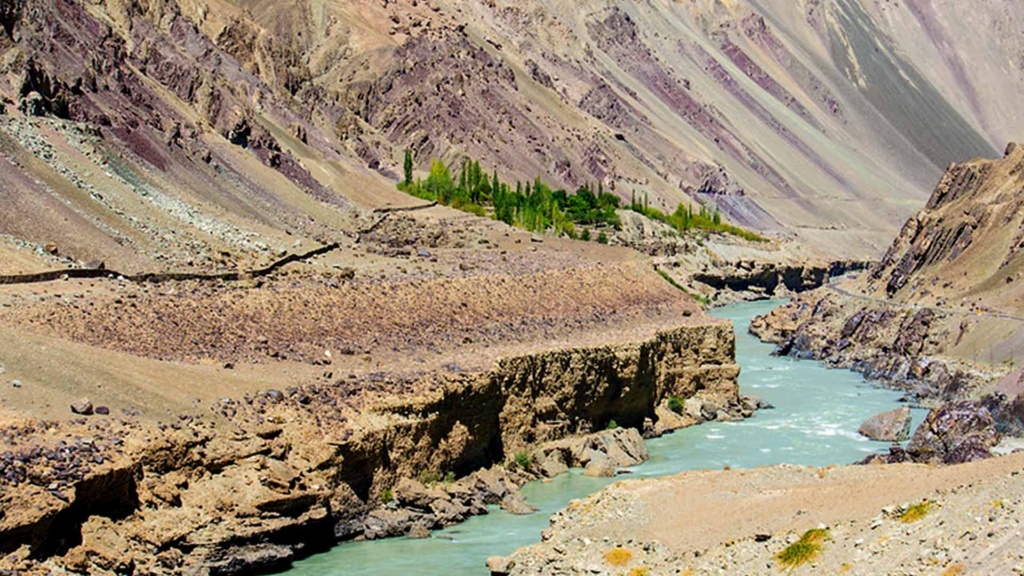
That is the first correction Hanle made to my imagination. I had arrived expecting night to be the event, but in September 2015, the first thing that held me was daylight: a wide valley, a road tired from distance, the thin administrative seriousness of an Inner Line Permit, and the white observatory domes sitting on the slope like objects from another discipline. They looked clean against the brown mountain, almost improbable, as if science had been placed carefully in a landscape that otherwise preferred stone, wind and prayer flags.
I had come to Hanle in September 2015 in a Maruti Gypsy, part of a recce trip rather than a polished itinerary. That suited the valley. Hanle did not feel like a place to arrive in with certainty; it felt like a place where the road, the permit, the weather and the hour all had to agree before you could begin looking around. The route had already taught some restraint by the time the valley opened. Checkposts and permits kept the journey practical. The road beyond Loma did not need drama to feel remote; it only needed space, wind and the knowledge that help was not always close. Somewhere along the way, kiang appeared on the plains, moving with a freedom that made the vehicle feel temporary.
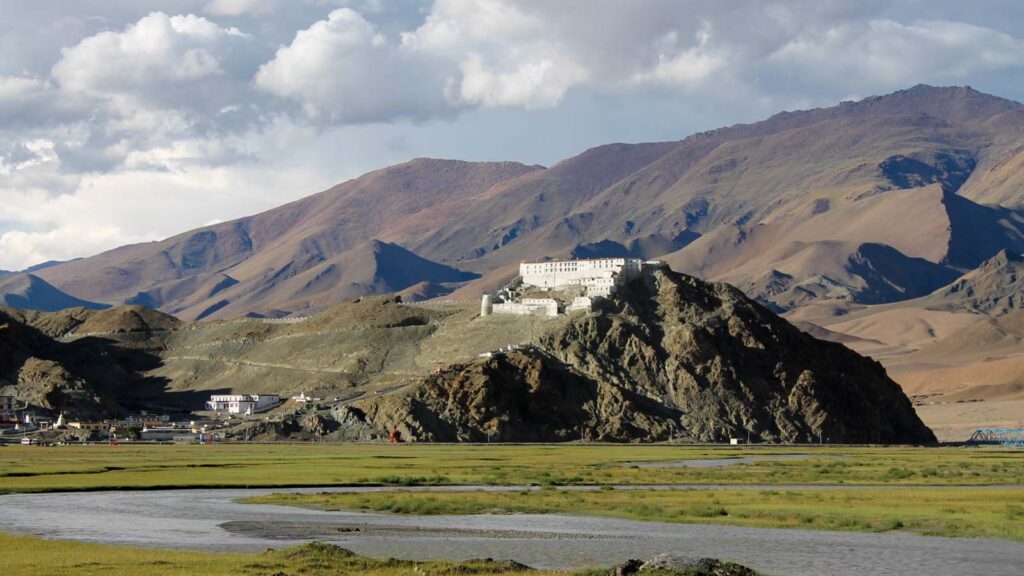
Hanle itself did not arrive as a spectacle. It spread quietly: whitewashed houses, fields, the gompa on its hill, dogs testing the road as if they owned its dust, and those domes on the far slope. I had read just enough to know there was an important observatory here and not enough to understand what that really meant. At the time, I thought astronomy was mostly looking up. Hanle began teaching me that looking up also depends on roads, power, weather, instruments, patience, maintenance, permissions and people who keep ordinary life moving under extraordinary skies.
I did not enter the Indian Astronomical Observatory at night. I did not look through the Himalayan Chandra Telescope or any other telescope there. The domes remained outside me, visible but not available, which was probably the right relationship for that first visit. They gave the valley a second horizon: one made not of mountains, but of questions I was not yet qualified to ask.
Changthang by Motorbike: Between Yaks and Sky
At Hanle Monastery, where Stephanie and I were shown cloth-wrapped pecha before the valley moved into evening light.
Tsering’s kitchen before dark
I stayed with Tsering and her kitchen became the place where Hanle first made sense. Not the sky. Not the observatory. The kitchen.
That may sound like a small demotion for an astronomy story, but it is the opposite. Before darkness can become majestic, the body has to stop shivering, hands have to close properly around a cup, and the stomach has to be reminded that altitude is not an abstract condition. Tsering moved through the room with the practical ease of someone who knew where everything belonged: kettle, cups, stove, food, extra layer, guest, question, answer. Nothing was presented as wisdom. Things were simply done.
The room held the smells of tea, smoke, wool and the day’s work. Outside, Hanle was still bright, though the light had begun to sharpen into evening. Inside, warmth gathered around the stove with a kind of discipline. I remember sitting there with the mild embarrassment of a traveller who has arrived thinking of galaxies and has instead become deeply grateful for hot liquid. The body is honest in places like Hanle. It asks first for warmth, then for food, and only later for wonder.
Tsering did not turn the observatory into a myth. From her kitchen, it was one part of the valley’s life, visible on the hill, important but not separate from everything else. People had homes, animals, fields, roads, repairs, family news, weather concerns. The stars would come later whether I was ready or not. The stove needed tending now.
That changed the scale of the story. I had come to Hanle imagining a frontier of science and darkness. In the kitchen, frontier meant a house that had to stay warm, water that had to be managed, visitors who had to be fed, and a night that could be beautiful without becoming convenient. Astronomy, I began to understand, did not hover above village life. It depended on a village learning to live beside it.
The monastery roof
Before dark, Stephanie and I went up towards Hanle monastery.
The climb did not need to be difficult to slow us down. At that altitude, even a short ascent can expose the vanity of normal breathing. The monastery sat above the valley with the quiet confidence of buildings that have watched many kinds of weather pass. From there, Hanle opened in layers: houses below, fields, the road threading out, the observatory domes across the way, and beyond everything the cold geometry of the mountains.
The library scene is one of the parts I trust in memory because it was not theatrical. A monk showed us pecha wrapped in cloth, not as museum pieces arranged for travellers, but as things held, stored, protected and used within a living institution. I did not understand enough to say much, which was a useful position to be in. There are rooms where curiosity should enter softly.
Stephanie and I stood quietly, aware of being allowed into a space that was not ours. The cloth, the stacked texts, the filtered light, the small movements of someone handling what matters all of it brought the observatory back into view in an unexpected way. On one hill, instruments looked outward through machines and data. On another, texts were kept in careful order by hands and memory. Both depended on preservation. Both asked for patience. Both made my traveller’s appetite for a quick experience feel slightly foolish.
From the monastery, the white domes looked less like alien objects and more like neighbours across the valley. That was important. The observatory was not floating in an empty wilderness. It was part of Hanle’s inhabited landscape: monastery, houses, kitchen, road, animals, checkpost, wind, science. To crop the domes out of that would be dishonest. To crop the village out of the domes would be worse.
We stayed until the light began to thin. The valley did not darken dramatically. It changed by degrees. Shadows lengthened, roofs lost their glare, the wind sharpened, and the domes held the last pale light a little longer than the houses below.
Night, without a telescope
Night in Hanle did not arrive like a switch. It took possession slowly.
First the valley lost edges. Then the road softened. Then the mountains became shapes rather than surfaces. Then the sky began to fill, not all at once, but with a confidence that made the city-trained eye feel underused. The Milky Way came into view with a clarity I had not known how to prepare for. I tried to photograph it and failed in several ordinary ways: wrong settings, cold fingers, impatience, breath fogging concentration, a tripod that suddenly seemed less stable than it had in daylight.
The failure was useful. It forced me to look.
I did not know the names of everything above me. I could recognise some obvious patterns and bright objects, but I was mostly ignorant, and Hanle did not mind. The sky did not require vocabulary to be overwhelming. It required only darkness, cold and enough patience for the eyes to adjust. I stood outside with my neck tilted too far back, hands tucked and untucked from pockets, watching faintness become visible.
The cold changed the act of looking. In warmer places, you can gaze lazily. In Hanle, looking had a cost. Fingers stiffened. The face tightened. Batteries weakened. Every few minutes, the body reminded the mind that awe was not a substitute for gloves. I went back inside more than once, warmed my hands, returned, failed again with the camera, looked again without it.
That rhythm outside, cold, sky, failure, kitchen, warmth, outside again became the true observatory of the night. Not a dome, not an eyepiece, not a guided scientific revelation. Just a traveller moving between Tsering’s kitchen and a sky too large to hold properly, learning the difference between seeing and understanding. At the time, I thought I was there for stars. What I remember most now is the waiting around them.
The observatory domes were somewhere in the dark, doing or not doing work I could not see. Years later, reading more carefully, I understood that the Indian Astronomical Observatory at Hanle is a working scientific facility, not a night-time viewing deck for travellers. That knowledge made my 2015 memory cleaner, not smaller. I had not been excluded from the real experience. I had been given the one that was honestly mine: the domes from outside, the sky with naked eyes, and the village that made the night habitable.
Morning after the sky
Morning made Hanle ordinary again, which is one of the kindest things morning can do.
The night before had been enormous. The morning had cups, dust, cold hands, packed bags and the practical question of where the road would take us next. Tsering’s kitchen returned us to scale. Tea was poured. Food was eaten. The stove did its work without caring what the Milky Way had looked like a few hours earlier. Outside, the domes were visible again, white and silent on the hill, less magical in daylight and more impressive for that reason.
I looked at them differently now. The previous evening, they had seemed to promise revelation. By morning, they suggested labour: people maintaining equipment, dealing with weather, power, schedules, data, access, repair, bureaucracy and the physical difficulty of doing precise work in a remote place. I had not seen the inside of that labour, but I had at least stopped imagining it as effortless wonder.
Stephanie and I stepped outside before leaving. The air still had its hard edge. The road waited with the blank patience of roads in open country. Somewhere beyond the village, kiang moved across the plains again, indifferent to our departure. Hanle monastery sat above the houses, and the observatory domes held their place on the opposite rise. Between them was the valley itself, doing what it had done all along: hosting prayer, weather, science, animals, kitchens, permits, visitors and silence without needing to arrange them into a lesson.
I loaded my bags slowly, partly because of the cold and partly because I did not want the night to end too quickly. The vehicle door closed with a dull sound that belonged to the practical world. As we rolled out the Gypsy door closed with a dull metal sound that belonged to the practical world., I looked back once at the domes and then at the houses below them. That was the image that stayed: not the sky alone, not the observatory alone, but the two held together by a village that knew how to live under both.