The switchback
The wind found the gap in my jacket before I found the right line through the bend.
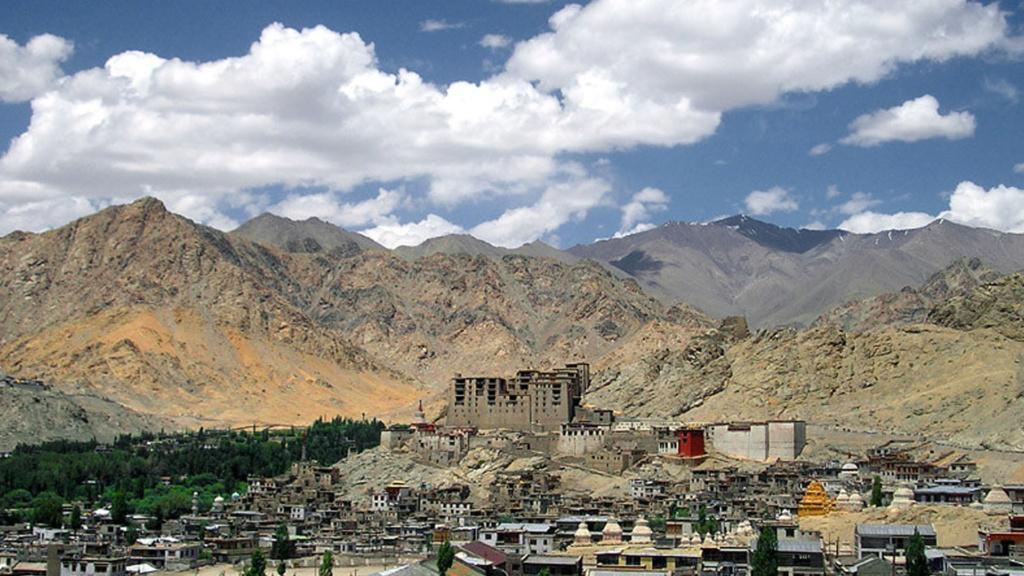
It was late September 2012, a candid solo ride towards Khardung La, the kind of ride I had told myself would remain simple: go up, spend a little time at the top, drink tea, take a few photographs, come back before the day became clever. Autumn had already entered Leh. The poplars had begun changing colour, mornings had turned dry and sharp, and the first cold made every zipper, glove seam and careless decision more noticeable.
Above South Pullu, the road worsened into the usual mixture of gravel, slush, broken patches and cold wind. Snow sat beside the track in dirty strips. The Royal Enfield moved under me with a heavy patience I did not fully deserve. I was alone, which meant every decision sounded more dramatic inside the helmet than it probably looked from outside.
The switchback came after a stretch where the wind had been leaning hard into the bike. I took the inside line, too stiff in the arms, too aware of the drop beyond the outer edge. The rear tyre shifted on loose stone and slush, not enough to throw me, but enough to make the body understand how quickly confidence can leave. I stopped in a pocket where the mountain could at least hold the motorcycle if my hands began to argue with each other.
That was where I almost turned back.
There was no grand panic. Just a clean list of facts: bad surface, cold wind, snow, a body already working harder than it wanted to admit, and no noble reason to continue if the next bend looked worse. I put the bike on its stand and stepped into the wind. The prayer flags above the road were pulled nearly horizontal. A loose piece of tin somewhere clapped against stone. My calves hummed from the skid.
The wind did not speak, of course. Weather does not owe us language. But fear is an excellent translator, and in that moment it translated every gust into a question: why exactly are you doing this?
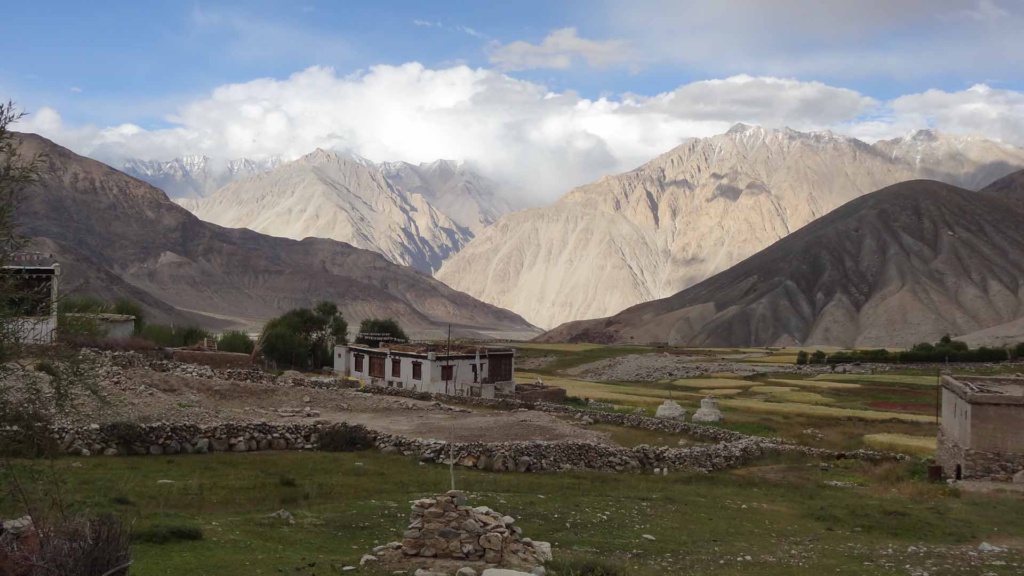
Khardung village
The woman with the thermos
A Sumo appeared before I had answered myself.
It stopped a little above the bend, and a woman stepped out with a scarf tied firmly around her head and a thermos tucked under her arm. A child watched me from the rear window with the seriousness children reserve for strangers, animals and minor disasters. The woman looked at the bike, the bend, the flags, then at me. She did not ask if I was afraid, which was kind.
“You’re stopped in a good place,” she said. “Wind is high on the outside today.”
I remember that sentence because it did what good advice does: it did not insult the fear, but it gave it a shape. She poured tea into the thermos lid and offered it to me. I accepted because refusing help is often just vanity wearing boots.
The tea was sweet and hot, and the lid warmed my fingers more than the gloves had. The wind kept pushing at us in pulses. She watched the flags rather than my face.
“One corner at a time,” she said. “We wait. Then we choose the next corner.”
That was the useful part. Not courage. Not conquest. Not any of the things riders like to put under photographs. One corner at a time. The child in the Sumo made binoculars with his hands and inspected me as if measuring whether the lesson had entered.
When the flags softened from furious to merely restless, she closed the thermos. The Sumo moved on carefully. I stood beside the bike for another minute, partly grateful, partly embarrassed that a stranger had made the day simpler than I had managed to make it.
I did not suddenly become brave. I only became less theatrical. I zipped the jacket higher, checked the stand, started the motorcycle and made a private rule: if the flags shouted, I would stop; if they only spoke, I would ride.
Thirty minutes at the top
The pass arrived without ceremony.
That is always the surprise of these places. From below, a pass feels like a destination large enough to reorganise your life. When you reach it, it is also a parking space, a canteen, a signboard, flags, soldiers, riders stamping their feet, tourists taking photographs, and everyone pretending the cold is not making them clumsy.
I reached Khardung La and stayed for about thirty minutes. That was enough. The wind did not stop at the top; it only became more experienced. I had tea in the canteen, held the cup with both hands, and felt the body slowly return from its narrow focus. The South Pullu details, the check, the soldier, the tea, the canteen, the register — all of it belonged to the rhythm of the day, but none of it needed exaggeration. This was not a summit conquest. It was a pause granted by weather, road workers, strangers and a motorcycle that had kept going.
I signed the book when asked. The act felt oddly grounding: name, date, place, a small proof that I had arrived without needing to turn arrival into theatre. Outside, the flags were still moving hard. I took photographs, but fewer than the place invited. My hands were cold, and the camera felt like one more object requiring negotiation.
On the descent, I saw bharal on a slope, patient and well arranged in their own world. They were not a revelation. They were animals standing where they belonged, making my presence feel temporary and slightly noisy. I rode past slowly and kept the memory cleaner by not forcing it into significance.
At the switchback where I had stopped earlier, I paused again, this time deliberately. The bend looked smaller from the other direction. That is one of the tricks of surviving something: afterwards, the place rearranges itself into something manageable. I knew better than to trust that entirely. The fear had been real. So had the wind. So had the tea.
The sketch
Back in Leh, before memory improved the day too much, I opened my notebook.
I have learned to distrust the kindness of remembered travel. Give it a few weeks and it removes the awkwardness, edits out the bad line, puts courage where hesitation was, and turns a practical cup of tea into a parable. So I drew the switchback while the body still remembered it properly.
The sketch was poor but useful. Inside line. Outside drop. The small square where the stand had bitten the ground. A mark for the Sumo. Another for the place where the woman had stood with the thermos. I wrote “one corner at a time” beside the bend, not because it sounded profound, but because it had worked.
I wrote down the facts too: slush, cold wind, snow beside the track, bad surface, flags nearly horizontal, tea from the thermos lid, child watching from the window, thirty minutes at the pass, canteen, register, bharal on descent. Facts have a way of protecting a story from becoming too pleased with itself.
The title came later: What the Wind Said on Khardung. Even now, I know the wind did not say anything. It pushed, cut, rattled, slapped cloth and tested the bike. I was the one making sentences out of it. But perhaps that is what a notebook dispatch is allowed to admit: not that the landscape teaches, but that the body, under pressure, begins to hear its own clearer voice.
The next morning
The next morning, I zipped the jacket more carefully.
That was the ending the ride left me with. Not the summit, not the photograph, not the line in the register. A zipper pulled higher because yesterday’s wind had found the weak place. The smallest correction, learned physically.
Leh was beginning again outside: cold water, shutters, dogs, early tea, the mechanic’s glance at another rider’s plan. I put the biscuits into one pocket, the notebook into another, and stepped out with the sketch still drying inside it. Khardung sat somewhere above town, already busy being weather.
I did not look at it with false courage. I only checked the zip once more and walked back into the morning, carrying one useful sentence from the switchback.
One corner at a time.